
GPT-INDIA Air Washer System, Wet Scrubber and Axial Flow Fan Solutions for Industrial Air Management
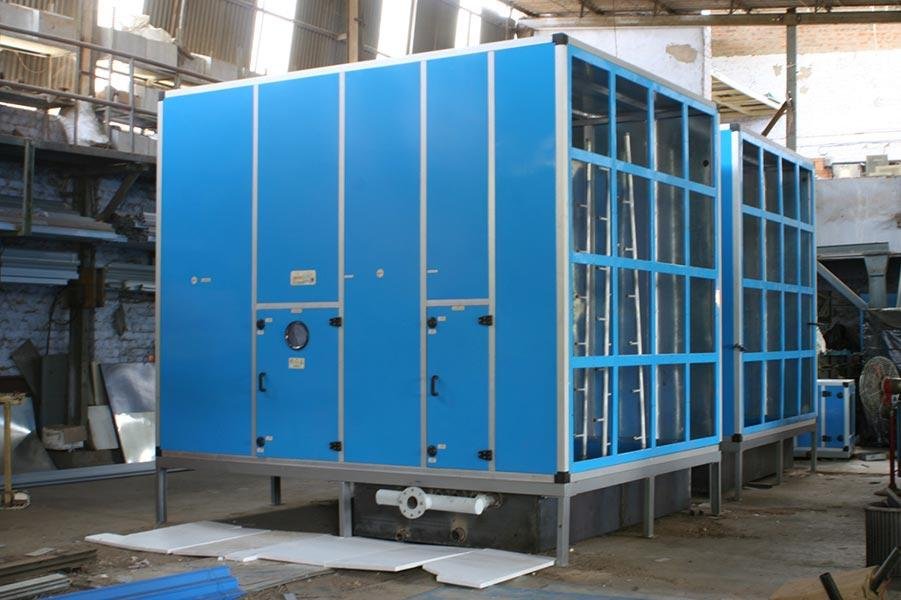
Industrial air management is not only about removing pollutants. A properly engineered system must also move the required volume of air, capture contaminants at the source, maintain suitable working conditions, and handle the specific characteristics of the process.
Factories may simultaneously deal with dust, fumes, chemical gases, heat, humidity and unpleasant odours. These problems require different technologies. An Air washer system may be appropriate for air conditioning and evaporative cooling, while a Wet Scrubber can be used for suitable gas or particulate treatment. A Dust collection system focuses on capturing particulate matter, whereas a Fume extraction system is designed around localized airborne emissions. Fans then provide the airflow needed to move contaminated or conditioned air through the system.
GPT-INDIA develops industrial air pollution control, ventilation and exhaust solutions based on these application requirements. The company states that its product range includes wet scrubbers, air washer systems, exhaust systems, dust extraction systems and centrifugal blowers and axial flow fans.
Why Airflow Is the Foundation of Industrial Ventilation
Every extraction or air-treatment system depends on controlled airflow.
If a hood does not capture enough air, contaminants can escape into the workplace. If duct resistance becomes excessive, the fan may not deliver the intended airflow. Similarly, an air-treatment unit can perform differently when actual operating conditions vary significantly from the original design assumptions.
For this reason, airflow should be considered from the capture point through the ductwork, treatment equipment, fan and final discharge point.
The objective is not simply to install a high-capacity fan. The complete system needs to operate at its required airflow and pressure.
Air Washer System for Industrial Air Conditioning
An Air washer system uses water-air contact to condition an air stream. Depending on its configuration and operating conditions, it can support evaporative cooling, humidification and air washing.
This makes air washers useful in industrial environments where temperature and humidity control are important.
A spray-type arrangement brings water into contact with the moving air. Heat and moisture transfer then occur between the air and water. The final performance depends on factors such as airflow, water circulation, inlet air conditions, water temperature, spray arrangement and system design.
GPT-INDIA describes its air washer offering as Spray Type Air Washer systems and lists Air Washer/AHU among its industrial products.
Air Washer System vs Pollution-Control Equipment
An air washer should not automatically be treated as a replacement for dedicated emission-control equipment.
If a machine generates concentrated dust, the first requirement may be source capture through a dedicated Dust collection system.
If a process releases chemical fumes or gases, a Wet Scrubber or another suitable treatment technology may be more appropriate.
An air washer is generally associated with conditioning or washing an air stream, while pollution-control equipment is selected specifically according to the contaminant and required treatment level.
Understanding this distinction helps industries avoid choosing equipment simply because both technologies involve airflow and water.
Designing a Dust Collection System Around the Process
A Dust collection system normally begins with identifying where particulate matter is generated.
Grinding, cutting, polishing, crushing, conveying and material handling can all produce airborne dust. The collection hood or enclosure needs to capture the contaminated air before the particles spread through the facility.
The captured air is then transported through ductwork toward suitable filtration equipment.
Depending on the process, the filtration stage may involve cyclone separation, multicyclone equipment, fabric filtration, cartridge filtration or another suitable technology.
GPT-INDIA's dust-collection information emphasizes that airflow, dust characteristics, temperature, moisture, particle size, dust loading and installation conditions should be considered when selecting the system.
Why Source Capture Matters
General ventilation and source extraction perform different functions.
General ventilation changes or conditions the air within a larger space. Source extraction attempts to capture the contaminant before it spreads.
For high-dust industrial processes, capturing contamination at the source can reduce the amount of surrounding air that needs to be treated.
Hood location, enclosure design, duct velocity and fan performance therefore become important parts of the system.
A technically sophisticated filter cannot compensate completely for poor contaminant capture upstream.
Fume Extraction System for Industrial Processes
A Fume extraction system is designed around airborne fumes, smoke or other process emissions.
Applications can include welding, heating, melting, surface treatment, chemical operations and manufacturing processes.
The first engineering question is usually where the contaminant is generated and how quickly it disperses.
Extraction arms, hoods, enclosures or localized extraction points can be positioned around the process so that contaminated air is directed into the exhaust network.
The treatment stage depends on what is actually present in the extracted air.
If the stream contains particulate matter, filtration may be appropriate. If it contains gases or soluble chemical contaminants, wet scrubbing or another gas-treatment method may be necessary.
GPT-INDIA describes its Fume Exhaust System as equipment for capturing hazardous fumes, gases and smoke.
When a Wet Scrubber Is the Better Choice
A Wet Scrubber uses liquid contact to treat a contaminated gas stream.
The technology can be used for suitable particulate matter, fumes, odours and gaseous pollutants, depending on the scrubber configuration and process chemistry.
The contaminated gas is brought into contact with a liquid. Pollutants may then be absorbed, neutralized, captured or otherwise transferred into the liquid phase.
The correct arrangement depends heavily on the contaminant.
For example, a system designed to handle acidic gases may require a different liquid chemistry and material of construction from a system intended mainly for particulate removal.
GPT-INDIA lists Wet Scrubbers among its air pollution-control products and states that its systems are used for industrial toxic-gas and odour-control applications.
Selecting Wet Scrubber Suppliers
Choosing Wet Scrubber suppliers should begin with process information rather than equipment dimensions alone.
The supplier should understand:
- Gas flow rate
- Pollutant type
- Pollutant concentration
- Gas temperature
- Moisture content
- Required removal performance
- Pressure drop
- Liquid circulation requirements
- Material compatibility
- Maintenance conditions
These factors influence the scrubber configuration, contact method, liquid-handling arrangement and construction materials.
A supplier that understands the complete process can also help determine whether a wet scrubber is actually appropriate or whether another treatment method should be considered.
What Wet Scrubber Manufacturers Should Evaluate
Wet Scrubber manufacturers need sufficient information to design the system around actual operating conditions.
Corrosive gases may require corrosion-resistant construction. High-temperature gases may require cooling or conditioning before treatment. High particulate loading may influence the preferred scrubber arrangement and liquid-handling requirements.
The system also needs suitable mist elimination where required, because droplets leaving the scrubber can create downstream problems.
Pump selection, spray arrangement, nozzles, packing or contact sections, drains and access points should therefore be considered together.
Why Maintenance Is Important in Wet Scrubbing
Wet treatment systems have their own maintenance requirements.
Operators may need to monitor liquid circulation, spray performance, pressure drop, liquid quality, pump operation and mist-eliminator condition.
Where chemicals are used, concentration or pH may also need monitoring according to the process.
Solids can accumulate in the circulating liquid, while deposits may develop on internal components.
A preventive maintenance program helps identify these conditions before they significantly affect system performance.
Biogas Scrubber Suppliers and Gas Treatment
Biogas applications present another example where gas characteristics determine treatment selection.
Raw biogas can contain contaminants such as hydrogen sulfide, depending on the feedstock and digestion process. A suitable scrubber can form part of the gas-treatment arrangement when contaminant reduction is required.
When comparing Biogas Scrubber suppliers, the discussion should include raw-gas flow, H₂S concentration, gas temperature, moisture, pressure, required outlet quality and downstream gas use.
A system feeding an engine, boiler or other gas-utilization equipment may have different treatment requirements from a system intended for further upgrading.
The treatment technology should therefore be selected according to the actual gas composition and end use.
Choosing Between Axial Flow Fan and Other Industrial Fans
The fan is often the component that determines whether the required airflow actually reaches the process.
An Axial flow fan moves air primarily parallel to the fan shaft. These fans can be suitable for applications requiring relatively large air volumes at appropriate pressure conditions.
Centrifugal fans, by comparison, change the direction of airflow through the fan and are commonly considered where higher pressure development is required.
The correct selection depends on airflow, static pressure, temperature, gas composition, installation arrangement, noise requirements and operating conditions.
Choosing a fan only according to its maximum airflow rating can lead to disappointing real-world performance.
Why Fan Pressure Matters
Consider an extraction system with several hoods, long ducts, bends, dampers and a pollution-control unit.
The fan must overcome the resistance created by all these components.
As filters load with dust or scrubber conditions change, system resistance can also change.
The operating point of the fan therefore needs to match the actual system curve.
A properly selected Axial flow fan can be highly effective where its airflow-pressure characteristics match the application. In other situations, a centrifugal arrangement may be more appropriate.
GPT-INDIA lists both centrifugal blowers and axial flow fans within its industrial ventilation product range.
Integrating Fans With Pollution-Control Equipment
The fan should not be selected independently from the pollution-control equipment.
For example, a system may consist of:
Capture hood → Ductwork → Dust collector/scrubber → Fan → Stack
Every component contributes to the total resistance.
Changing one component can therefore influence the fan requirement.
If a larger filter is installed, ductwork is modified, or additional extraction points are added, the required operating conditions may change.
This is why fan selection should ideally be completed after the complete airflow requirement and pressure losses have been established.
GPT-INDIA for Industrial Air and Pollution Control
Green Planet Technologies, popularly known as GPT-INDIA, works in Air Pollution Control, Ventilation and Exhaust Technology. The company was founded in 2006 and states that it has installations across 700 locations in 25 countries. Its product portfolio includes Wet Scrubbers, dust collectors, exhaust systems, Air Washer/AHU systems, centrifugal blowers and axial flow fans.
Its engineering approach covers applications where dust, fumes, gases, heat and process-air requirements need to be addressed through purpose-specific equipment.
Rather than treating every factory air problem as identical, system selection can be based on contaminant type, airflow, pressure, temperature, installation conditions and maintenance requirements.
GPT-INDIA NAP Details
Business Name: Green Planet Technologies, popularly known as GPT-INDIA
Office Address: 59/2/1, Site 4, Industrial Area, Sahibabad, Distt. Ghaziabad–201010, Uttar Pradesh, India
Phone: +91-9773500660
Email: info@gpt-india.com
Website: gptindia.in
Frequently Asked Questions
What is an Air washer system used for?
An Air washer system can be used for industrial air conditioning applications such as evaporative cooling, humidification and air washing, depending on the system configuration.
What is a Wet Scrubber?
A Wet Scrubber is an air pollution-control device that uses liquid-gas contact to treat suitable particulate or gaseous pollutants.
How do I choose Wet Scrubber suppliers?
Look for suppliers who evaluate gas flow, contaminant type and concentration, temperature, required treatment level, materials of construction, liquid circulation and maintenance requirements.
What is a Fume extraction system?
A Fume extraction system captures fumes, smoke or other airborne contaminants close to their source and transports them to suitable treatment or discharge equipment.
What does an Axial flow fan do?
An Axial flow fan moves air primarily parallel to its shaft and is commonly considered for high-volume airflow applications where its pressure characteristics match the system requirement.
Are Wet Scrubber manufacturers suitable for every pollution-control application?
No. Wet scrubbers are suitable for specific gas and particulate-treatment applications. The pollutant characteristics and process conditions should be evaluated before selecting the technology.
Why is fan selection important in a Dust collection system?
The fan must overcome the resistance created by hoods, ducts, filters, dampers and other components while maintaining the required airflow at the capture points.
Conclusion
Industrial air management works best when capture, treatment and airflow are designed as one connected system.
An Air washer system can address suitable air-conditioning and evaporative-cooling requirements. A Dust collection system can capture particulate emissions, while a Fume extraction system focuses on localized fumes and smoke. A Wet Scrubber can provide liquid-based treatment for appropriate gases, odours and particulate contaminants.
The fan then provides the airflow required to make the system function. Selecting an Axial flow fan or another fan type should therefore be based on the actual airflow and pressure requirement rather than capacity alone.
GPT-INDIA brings these technologies together across industrial Air Pollution Control, Ventilation and Exhaust applications, with equipment selection based on process conditions and project requirements.

 English
 Arabic
 French
 Spanish
 Portuguese
 Deutsch
 Dutch
Dutch
 Italiano
 Russian
 Romaian
 Portuguese (Brazil)
 Greek
Greek