
Training Management Solutions: How Modern Businesses Can Simplify Employee Learning
Employee learning has become an ongoing part of modern workforce management. Businesses need to train new hires, develop existing employees, introduce new processes, and keep teams updated as technologies and industry requirements change. However, managing all of this through spreadsheets, emails, shared documents, and manual follow ups can quickly become difficult.
This is where training management solutions can make a meaningful difference. Instead of treating employee training as a collection of disconnected activities, organizations can use technology to organize learning materials, assign courses, monitor progress, and evaluate training outcomes from a centralized environment.
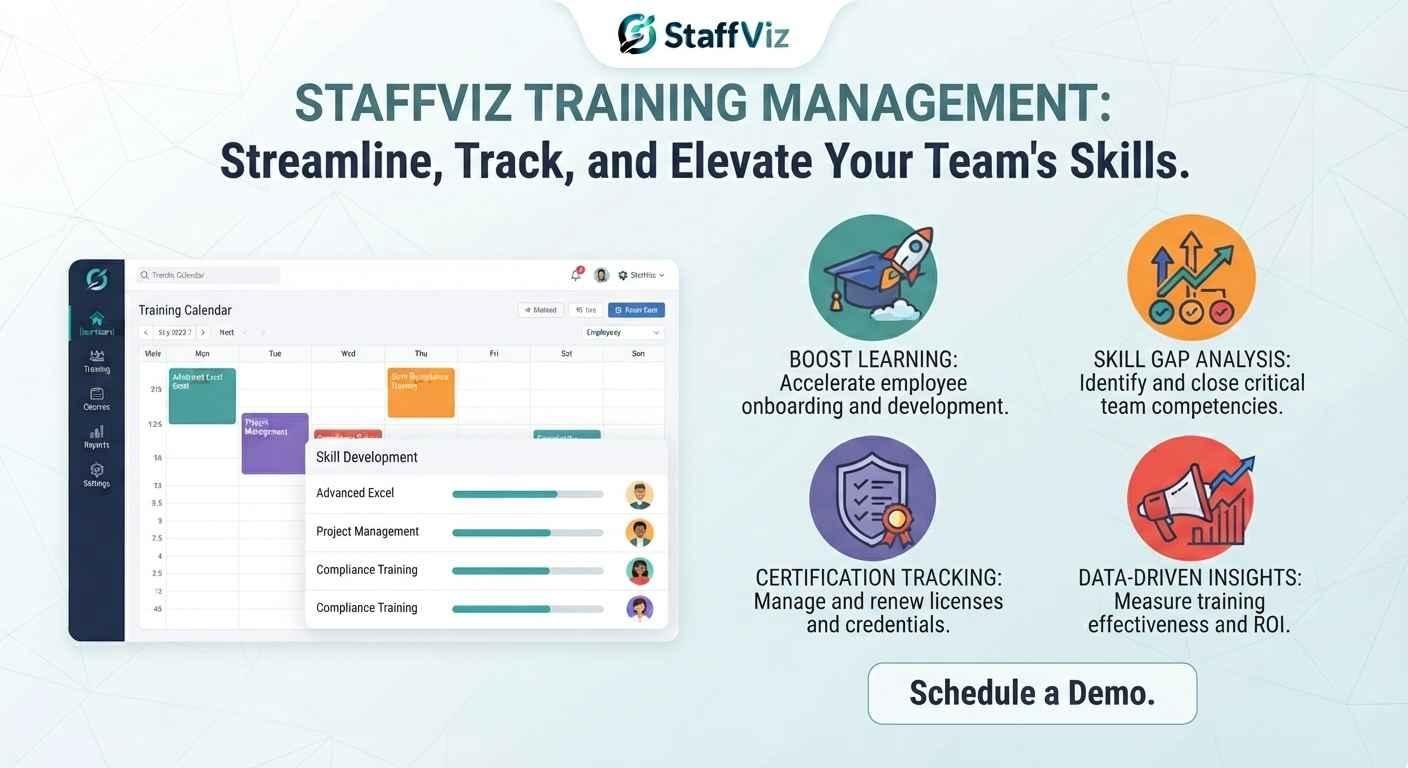
Modern training management software can also make learning easier to manage as a company grows. StaffViz, for example, provides tools for creating and assigning courses, managing articles and quizzes, tracking course progress, and reviewing course time and performance.
What Are Training Management Solutions?
Training management solutions are technologies designed to help businesses plan, deliver, organize, and monitor employee learning programs. Rather than relying on separate files and manual records, organizations can centralize training activities and make learning progress easier to understand.
A small business might initially manage employee training with a spreadsheet containing employee names, course assignments, completion dates, and notes. As the workforce expands, however, maintaining accurate information becomes increasingly time consuming. A centralized system can reduce this administrative burden while giving managers better visibility into employee development.
The goal is not simply to store training content. An effective solution should help connect learning activities with employee development, business requirements, and measurable progress.
Why Businesses Are Moving Away From Manual Training
Training Becomes Difficult to Track
Manual training management often creates gaps in visibility. An HR manager may know that a course was assigned but have difficulty determining whether employees actually completed it, how much time they spent learning, or whether they performed well in an assessment.
This becomes particularly challenging for organizations with remote or distributed teams. Employees may be working in different locations and following different schedules, making manual follow ups even more difficult.
Learning Materials Become Scattered
Training information can quickly become fragmented across email attachments, shared folders, documents, videos, and external platforms. Employees may waste time searching for the correct material instead of focusing on learning.
Centralizing courses, articles, assessments, and progress information gives employees a more structured learning experience.
Key Features to Look For in Training Management Solutions
Course and Learning Material Management
A useful platform should make it straightforward to create, organize, update, and assign learning materials. This allows businesses to develop structured training programs for onboarding, compliance, technical skills, customer service, leadership, and professional development.
StaffViz supports course and article management, allowing organizations to create and assign learning materials to employees.
Progress Tracking and Assessments
Assigning a course is only the beginning. Managers also need to understand whether employees are progressing through the material.
Quizzes and assessments can provide additional information about learning outcomes. StaffViz includes quizzes and assessments alongside course dashboards and performance reporting, giving organizations a way to monitor learning progress and completion.
Training Reports and Analytics
Training data becomes more valuable when it can be reviewed over time. Managers can examine course completion, time spent learning, and performance information to identify areas where additional support may be required.
For example, suppose a company introduces new software and assigns the same training course to 30 employees. Most employees complete the course quickly, but several repeatedly struggle with the assessment. Instead of assuming those employees are underperforming, the manager can investigate whether the training material needs clarification or whether additional instruction would help.
How Employee Training Solutions Support Different Stages of the Employee Journey
Training is not limited to onboarding. Employees may need different learning experiences throughout their careers.
During onboarding, new employees can receive structured courses covering company policies, systems, responsibilities, and workplace expectations. Later, the same organization might provide role specific training to improve technical capabilities or prepare employees for new responsibilities.
Leadership development, compliance education, software training, and continuous professional development can also become part of a structured learning strategy.
This makes employee training solutions useful beyond a single training event. They can support continuous development as employees and business requirements evolve.
Connecting Training With Employee Performance
One of the biggest advantages of centralized training data is the opportunity to connect learning activity with broader workforce information.
Suppose a customer service company notices that new employees who complete product training quickly still have difficulty handling complex customer requests. The issue may indicate that course completion alone is not enough. Managers might need to review assessment results, training content, task performance, or additional coaching requirements.
StaffViz combines employee training with broader workforce management capabilities, including productivity reporting, task management, time tracking, and employee performance information.
This broader context can help organizations think about training as part of employee development rather than as an isolated HR activity.
How to Choose the Right Training Management Solution
Before selecting a platform, businesses should identify their actual learning requirements. Consider the number of employees, types of training, frequency of course updates, assessment requirements, reporting needs, and whether employees work remotely or across multiple locations.
Ease of use is equally important. If managers find the system complicated, they may return to spreadsheets and manual processes. Employees should also be able to access assigned learning materials without unnecessary friction.
Integration can be another consideration. Organizations that already use other business applications may benefit from a platform that connects with their existing technology environment. StaffViz currently lists integrations with tools including Zapier, Salesforce, Trello, Monday, Slack, and Asana.
Making Training More Effective With Better Organization
Technology alone does not guarantee effective learning. Businesses should first define clear training objectives and then choose appropriate content, assessments, and completion requirements.
Managers should also review training data regularly. If employees consistently struggle with one section of a course, the solution may be to improve the material rather than simply assign the course again. Similarly, if employees complete training successfully but performance does not improve, the organization may need to reconsider how learning is applied in everyday work.
The strongest approach combines structured training with feedback, practical application, and ongoing development.
Conclusion
Modern organizations need employee learning to be organized, measurable, and adaptable. Training management solutions can replace scattered training records and repetitive administrative work with a more structured approach to courses, learning materials, assessments, progress tracking, and performance reporting.
The right solution can help businesses make training easier for managers while giving employees a clearer path for continuous development. Organizations looking for employee training software can explore StaffViz, which combines employee learning capabilities with broader workforce management, productivity, project, and reporting tools.
Instead of treating training as a one time requirement, businesses can use centralized technology to create a continuous learning environment that supports employee growth and changing organizational needs.
FAQs
1. What are training management solutions?
Training management solutions are software systems that help businesses organize, assign, deliver, and track employee learning activities, including courses, articles, quizzes, assessments, and training progress.
2. What are the benefits of using training management software?
Training management software can reduce manual administration, centralize learning materials, improve progress visibility, simplify course assignments, and provide useful information about employee development.
3. How can training management solutions improve employee development?
They can provide employees with structured learning paths while helping managers monitor course completion, assessments, learning time, and development progress.
4. What features should businesses look for in employee training solutions?
Important features can include course management, learning material organization, quizzes, assessments, progress tracking, reporting, dashboards, and integrations with other business systems.
5. Can training management software be used for employee onboarding?
Yes. Training software can help organizations provide new employees with structured learning materials covering company policies, systems, job responsibilities, and other onboarding requirements.
6. How do training management solutions track employee progress?
Depending on the platform, progress can be monitored through course completion information, assessment results, learning time, dashboards, and performance reports. StaffViz provides course dashboards, course time reports, and course performance reports.
7. Can training management solutions support remote employees?
Yes. Centralized learning platforms can give remote employees access to assigned courses and learning materials while allowing managers to monitor progress without relying entirely on manual follow ups.
8. How can businesses measure whether employee training is effective?
Businesses can review completion rates, assessment performance, learning time, employee feedback, skill development, and changes in job performance. Combining these indicators provides a more complete view than course completion alone.

 Arabic
 French
 Spanish
 Portuguese
 Deutsch
 Turkish
 Dutch
Dutch
 Italiano
 Russian
 Romaian
 Portuguese (Brazil)
 Greek
Greek