
From Project Parcel to Point of Interconnection: Key Engineering Steps
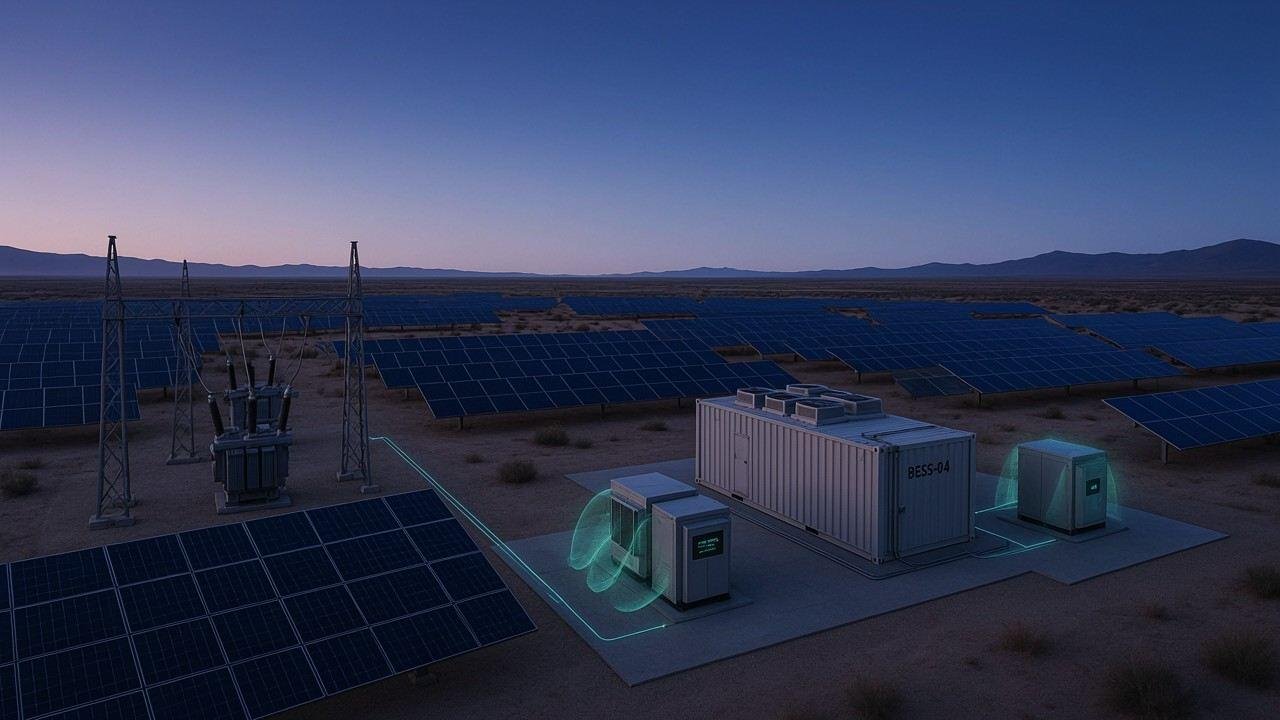
Developing a utility-scale power project involves much more than selecting land and installing electrical equipment. Between the initial project parcel and the final connection to the transmission or distribution grid, engineers must address site constraints, electrical design, system studies, utility requirements, protection, controls, and regulatory compliance.
The journey from parcel to point of interconnection is therefore a structured engineering process in which early decisions can significantly influence project cost, schedule, reliability, and constructability. A well-planned approach helps project developers understand grid requirements early and reduces the risk of expensive redesigns later.
1. Evaluating the Project Parcel and Grid Connection Potential
The engineering process begins with understanding the project site. Engineers evaluate the available parcel, proposed generation capacity, technology, surrounding infrastructure, and potential routes for electrical facilities.
For renewable projects such as solar, wind, and battery energy storage systems, the distance between the generation facility and a suitable grid connection point can have a major impact on project economics. Engineers examine nearby substations, transmission lines, distribution facilities, voltage levels, available capacity, and physical access.
Site evaluation can also include:
- Available land and project boundaries
- Existing transmission and distribution infrastructure
- Potential collector system configurations
- Transmission or distribution line routing
- Substation location and expansion requirements
- Environmental and permitting constraints
- Access roads and constructability
- Preliminary equipment and interconnection requirements
This early assessment establishes whether a proposed parcel has a practical path toward grid interconnection.
2. Defining the Point of Interconnection
Once potential grid connection options have been identified, the next step is defining the Point of Interconnection (POI). The POI is the electrical location where the project connects to the utility or transmission system and where ownership, operational responsibility, metering, protection, and technical requirements may be established.
The POI can influence nearly every downstream engineering decision. It affects the collector system, step-up transformers, substation configuration, transmission facilities, protection schemes, metering, communications, and control systems.
Effective point of interconnection engineering requires close coordination between the project team and the applicable transmission or distribution provider. Engineers must understand the utility's interconnection requirements, applicable technical standards, voltage requirements, fault-duty limitations, and expected operating conditions.
Defining the POI early gives the project team a clear electrical boundary around which detailed engineering can be developed.
3. Performing Interconnection and Power System Studies
After the potential POI is established, engineers perform detailed power system studies to determine how the proposed project will interact with the existing grid.
Typical studies may include load flow analysis, short-circuit analysis, transient stability studies, voltage stability assessments, reactive power analysis, and power quality evaluations. For inverter-based resources, additional dynamic and electromagnetic transient studies may be required depending on the project and utility requirements.
These studies help answer important questions:
- Can the grid accommodate the proposed generation?
- Will the project cause unacceptable voltage changes?
- Are existing transmission or distribution facilities adequately rated?
- Could the project increase fault current beyond equipment ratings?
- Are reactive power requirements satisfied?
- Could the project affect system stability?
- What network upgrades may be necessary?
The results can influence the final interconnection configuration and identify additional equipment or upgrades required before the project can connect safely and reliably.
4. Developing the Electrical Design from Generation to POI
With the interconnection requirements and study results established, engineers can develop the electrical infrastructure connecting the generation facility to the POI.
For a typical utility-scale project, this may include the collector system, medium-voltage equipment, step-up transformers, substation, high-voltage switchgear, transmission line, metering equipment, protection systems, and communications infrastructure.
Engineering deliverables can include single-line diagrams, equipment specifications, grounding designs, protection and control schematics, cable schedules, equipment layouts, and electrical calculations.
The design must account for normal operation as well as abnormal conditions. Equipment ratings, insulation coordination, grounding, clearances, thermal performance, protection coordination, and constructability all need to be considered.
This is where the POI engineering process moves from conceptual planning into detailed technical design. Decisions made during this stage should remain aligned with the interconnection study assumptions and utility requirements.
5. Coordinating Protection, Controls, Metering, and Communications
A grid connection is not complete simply because power can physically reach the transmission line or substation. The project must also communicate with and respond appropriately to the grid.
Protection engineering is particularly important. Engineers develop protection schemes designed to detect faults and isolate affected equipment while minimizing unnecessary interruptions. Relay settings and coordination must be evaluated against both project equipment and utility system requirements.
The interconnection design may also require:
- Revenue and utility metering
- Supervisory control and data acquisition (SCADA)
- Remote terminal or communications equipment
- Synchronization and control functions
- Reactive power and voltage controls
- Generator or inverter controls
- Teleprotection systems
- Utility communications interfaces
For modern renewable and storage projects, controls and communications can be just as important as physical electrical equipment. Accurate modeling and testing help verify that the facility behaves as expected under changing grid conditions.
6. Finalizing Compliance, Utility Coordination, and Energization
The final phase brings the engineering, documentation, utility coordination, and commissioning activities together. Project teams must demonstrate that the facility meets applicable interconnection requirements and agreed technical specifications.
Depending on the project and jurisdiction, this can involve compliance with utility standards, transmission-provider procedures, applicable reliability requirements, equipment testing, protection testing, model validation, and commissioning documentation.
Engineers may support activities such as:
- Final design reviews
- Utility drawing and study coordination
- Protection and control testing
- Equipment commissioning
- Metering verification
- SCADA and communications testing
- Generator or inverter model verification
- Energization planning
- Operational readiness reviews
A structured process helps ensure that the facility reaches the POI with its electrical, protection, control, and communication systems properly coordinated.
Building a Reliable Path from Land to Grid
The path from a project parcel to an energized point of interconnection involves many interconnected engineering decisions. Site selection influences the potential POI; the POI influences system studies; study results affect equipment and network upgrades; and the final design must satisfy utility, protection, control, and compliance requirements.
For developers, understanding this sequence early can improve project planning and reduce avoidable changes during later design stages. For engineers, maintaining consistency between studies, specifications, drawings, models, and field implementation is essential.
A carefully managed parcel to point of interconnection strategy ultimately creates a clearer path from project concept to grid connection. By combining site evaluation, interconnection studies, detailed electrical design, protection and controls engineering, and utility coordination, project teams can develop infrastructure that is technically sound and prepared for reliable grid operation.

 English
 French
 Spanish
 Portuguese
 Deutsch
 Turkish
 Dutch
Dutch
 Italiano
 Russian
 Romaian
 Portuguese (Brazil)
 Greek
Greek