
How to Teach Kids About Figurative Language
Introduction
Figurative language is an essential part of learning English because it helps children understand creative expressions, improve reading comprehension, and develop strong writing skills. It makes stories more interesting, conversations more engaging, and writing more descriptive. However, young learners may find figurative language confusing because words and phrases do not always have their literal meanings. Parents and teachers can make learning easier by using simple examples, storytelling, games, and creative activities. With the right teaching methods, children can understand figurative language and use it confidently in everyday communication.
What Is Figurative Language?
How to Teach Kids About Figurative Language is the use of words and expressions in imaginative ways to communicate ideas, describe feelings, and create vivid pictures in the reader's mind. Unlike literal language, figurative expressions often have meanings beyond the actual words.
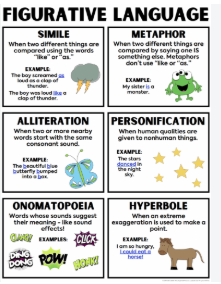
There are several common types of figurative language, including similes, metaphors, personification, hyperbole, idioms, and onomatopoeia. For example, "She is as busy as a bee" is a simile, while "The sun smiled at us" is personification. Introducing these expressions through familiar examples helps children understand how figurative language makes communication more expressive and enjoyable.
Start with Simple Examples
One of the easiest ways to teach figurative language is to begin with simple words and familiar situations. Children learn more effectively when new concepts are connected to their everyday experiences.
Start by explaining similes, which compare two different things using words such as "like" or "as." For example, "The baby is as cute as a kitten." Ask children to create their own comparisons using animals, objects, or people.
Once they understand similes, introduce metaphors, which compare two things without using "like" or "as." For instance, "My teacher is a shining star" describes someone who inspires or helps others. Simple examples and regular practice can make these concepts easier to remember.
Use Stories and Picture Books
Stories and picture books are excellent resources for teaching figurative language to young children. Many children's books contain colorful descriptions, imaginative comparisons, and playful expressions that make learning enjoyable.
Choose age-appropriate books and read them aloud. Pause when you encounter figurative expressions and ask questions such as, "What does this sentence mean?" or "Why did the author use these words?"
Encourage children to identify similes, metaphors, and personification in the stories. Illustrations can also help them visualize expressions and understand their meanings. Reading activities improve vocabulary, comprehension, and creative thinking while introducing children to different forms of figurative language.
Make Learning Fun with Games
Games are an effective way to make figurative language lessons exciting and interactive. Instead of relying only on textbooks and worksheets, teachers can introduce activities that encourage children to participate actively.
A matching game is a simple option. Prepare cards containing figurative expressions and their meanings, then ask children to match them correctly. For example, match "a piece of cake" with "something very easy."
Another activity is a simile challenge. Give children incomplete phrases such as "as strong as..." or "as quiet as..." and encourage them to complete each sentence creatively. These games develop vocabulary, teamwork, and understanding while making lessons enjoyable.
Teach Figurative Language Through Everyday Conversations
Children encounter figurative language in everyday conversations, television programs, songs, cartoons, and advertisements. Parents and teachers can use these familiar situations to explain different expressions.
For example, the phrase "It's raining cats and dogs" means that it is raining heavily. Similarly, "I am so hungry I could eat a horse" is an example of hyperbole, which involves deliberate exaggeration for emphasis.
Encourage children to notice these expressions in daily life and discuss their meanings. Asking simple questions about familiar phrases helps children recognize figurative language and understand how people use it to communicate humor, emotions, and ideas.
Encourage Creative Writing Activities
Creative writing provides children with opportunities to practice figurative language independently. Ask them to write short stories, poems, or descriptive paragraphs using similes, metaphors, and personification.
For example, children can describe a rainy day by writing, "The clouds cried throughout the afternoon." This sentence uses personification to give clouds a human action.
Teachers can also provide writing prompts such as describing a favorite animal, a beautiful garden, or an exciting adventure. Encourage children to use imaginative expressions and develop their own writing styles. Regular practice helps improve vocabulary, sentence structure, and communication skills.
Use Drawing and Visual Activities
Drawing is another enjoyable way to teach figurative language, particularly for younger learners who respond well to visual activities. Ask children to illustrate expressions such as "a heart of gold," "a mountain of homework," or "the stars danced in the sky."
After drawing, encourage them to explain the literal and figurative meanings of each expression. For example, a heart of gold does not mean that someone's heart is actually made of gold; it describes a kind and generous person.
Combining drawing with discussion helps children develop imagination, visual understanding, and the ability to interpret figurative expressions.
Practice Different Types of Figurative Language
Once children understand basic figurative expressions, introduce additional types, such as idioms, hyperbole, and onomatopoeia.
Idioms are expressions whose meanings differ from the literal meanings of their words. For example, "break the ice" means to make people feel more comfortable in a social situation. Hyperbole uses exaggeration, such as "I've told you a thousand times." Onomatopoeia uses words that imitate sounds, such as "buzz," "pop," and "splash."
Use simple worksheets, quizzes, and classroom discussions to help children recognize these expressions. Encourage them to explain their answers and create their own examples to strengthen their understanding.
Conclusion
How to Teach Kids About Figurative Language can be enjoyable and rewarding when lessons are simple, creative, and interactive. Parents and teachers can use stories, picture books, games, everyday conversations, drawing, and writing activities to help children understand different figurative expressions. Regular practice and encouragement allow young learners to recognize similes, metaphors, personification, idioms, and other forms of figurative language. These activities not only improve vocabulary and reading comprehension but also strengthen creative writing and communication skills. By making learning engaging and connecting it to everyday experiences, adults can help children appreciate the beauty of language and express their thoughts more confidently and imaginatively.

 Arabic
 French
 Spanish
 Portuguese
 Deutsch
 Turkish
 Dutch
Dutch
 Italiano
 Russian
 Romaian
 Portuguese (Brazil)
 Greek
Greek