
Jowar Atta: Benefits, Uses & How to Make Soft Roti | Complete Guide
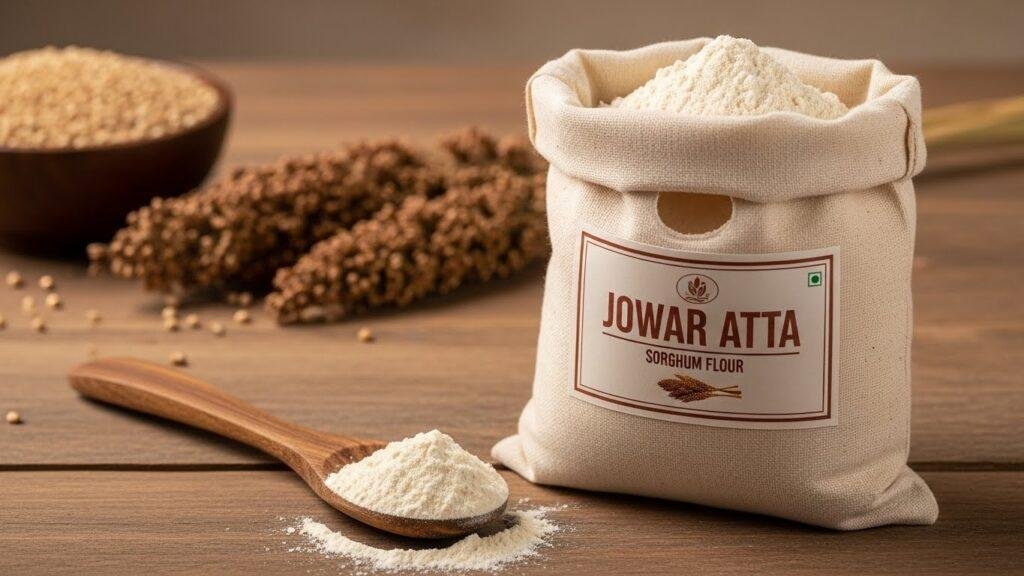
Every Indian kitchen has that one grain the elders swear by. For millions of households across Maharashtra, Karnataka, and Telangana, that grain is jowar. It's the flour behind a soft bhakri or a warm roti that keeps you going till evening — a staple that's been quietly feeding families for generations, long before "millets" became a wellness buzzword.
If you're new to jowar atta or trying to understand why your last batch of roti turned out cracked and crumbly, this guide covers everything: what it is, its nutritional profile, how it compares to wheat and other millets, and the one kitchen trick that decides whether it works for you.
What Is Jowar Atta?
Jowar atta is flour ground from whole sorghum grain. In English, jowar is simply called sorghum. Depending on where you're from, you may know it by other names too — cholam in Tamil, jonna in Telugu, or jola in Kannada.
It's worth clearing up a common mix-up here: jowar is not the same as jau, which is barley. The two names sound similar and are frequently confused, but they're entirely different grains with different properties.
Unlike wheat atta, jowar atta is stone-milled from whole grain with the bran left intact rather than sieved out. The best versions have nothing added — no binders, no preservatives, no anti-caking agents — just the ground grain itself.
Why Jowar Atta Is Naturally Gluten-Free
One of the biggest draws of jowar atta is that it's a naturally gluten-free grain. That makes it a popular everyday alternative for people cutting back on wheat, whether for digestive comfort, dietary preference, or simply to diversify their grain intake.
A quick caution though: if jowar atta is milled in a facility that also processes wheat, cross-contact is possible. For casual gluten reduction, this usually isn't a concern. But if you're managing coeliac disease or need strict gluten avoidance, always check the packaging for dedicated gluten-free certification rather than assuming.
Nutritional Profile of Jowar Atta
As a whole grain flour, jowar atta retains its bran and germ, which means it holds onto more of its natural nutrition than refined flours. Broadly, it's recognized as a good source of:
- Dietary fibre — which is why jowar-based bhakri tends to keep you feeling full longer than its size suggests
- Plant protein — a meaningful contribution for those building more plant-based protein into meals
- Minerals, including iron and manganese, both important for everyday metabolic and blood health
Because it's minimally processed — whole grain in, whole grain flour out — jowar atta is often positioned as a cleaner alternative to heavily refined flours.
Jowar vs. Wheat: What's Actually Different
The biggest functional difference between jowar atta and wheat atta comes down to gluten. Wheat's gluten network is what gives roti dough its stretch and elasticity. Jowar has none of that, so the dough behaves completely differently — and the resulting roti or bhakri has a softer, more crumbly bite rather than a chewy one.
Jowar is also considered the mildest and least assertive of the millets, which is often why nutritionists and home cooks alike recommend it as the easiest entry point for a family transitioning away from all-wheat meals. If you're nervous about how a millet-heavy diet will go down with picky eaters, jowar is usually the safest first step.
Traditionally, jowar is also treated as a summer grain across much of India — eaten when the body is thought to want something lighter than wheat, especially in warmer months.
Jowar vs. Bajra: Choosing the Right Millet
Jowar and bajra (pearl millet) often get grouped together, but they're not interchangeable. Jowar is milder and lighter in taste and texture, while bajra is denser and has a stronger, warmer flavor profile — traditionally eaten in winter rather than summer.
If you're just starting to introduce millets into your diet, jowar is generally the easier, gentler starting point. Bajra can come later, once your palate and digestion have adjusted to millet-based meals.
How to Use Jowar Atta in Everyday Cooking
Jowar atta is more versatile than most people realize. Common uses include:
- Bhakri and jowar roti — the everyday, most traditional use
- Thalipeeth — blended with besan (gram flour) and spices for a savory, textured flatbread
- Dosa and cheela batters — jowar lends a lighter, less dense body to fermented or instant batters
- Blended with wheat atta — a common transition method is starting with roughly a quarter jowar mixed into your regular wheat flour, gradually increasing the ratio as your family adjusts
The Real Reason Jowar Roti Cracks
If you've tried making jowar roti before and ended up with a dough that crumbled apart or cracked while cooking, you're not alone — and it's almost always down to one thing: water temperature.
Because jowar has no gluten to hold the dough together structurally, heat becomes the binding agent instead of elasticity. Here's the fix:
- Use hot water, not cold, when kneading the dough
- Knead while the dough is still warm — this is when it's most pliable
- Pat the dough out by hand rather than rolling it hard with a rolling pin
- Cook on a hot tawa so the roti sets quickly
Cold water is the single most common reason first attempts at jowar roti fail. Once you switch to the hot-water method, the difference is immediate.
Storage Tips to Keep Jowar Atta Fresh
Jowar flour is more delicate than wheat atta and can turn bitter surprisingly fast if it's left exposed to air. A few storage basics go a long way:
- Transfer the flour into an airtight steel or glass container as soon as you bring it home
- Store it cool and dry, well away from the stove and out of direct sunlight
- In humid climates or seasons, consider refrigerating whatever you won't use within a few weeks
- Always check the milling date on the packaging, since jowar atta loses its natural sweetness faster than wheat once it's ground
Because it lacks the preservative-like stability that refined wheat flour has, treating jowar atta more like a perishable ingredient — rather than a shelf-stable pantry staple — will noticeably improve the taste and texture of your rotis.
Who Should Consider Jowar Atta
Jowar atta tends to suit:
- Families looking to reduce wheat consumption without giving up roti altogether
- Anyone avoiding gluten who wants an everyday staple rather than a specialty, expensive product
- Households in regions like Maharashtra, Karnataka, and Telangana, where bhakri is already part of the weekly rotation
- Anyone actively trying to add more whole grains and millets into their diet
Can You Eat Jowar Roti Every Day?
Yes — in fact, this is exactly how many households across western and southern India already eat. Jowar has long been a daily staple rather than an occasional health food in these regions.
That said, if you're managing a specific health condition — diabetes, thyroid issues, PCOS, or anything requiring dietary monitoring — it's always worth checking with your doctor or dietitian before making any grain a daily default, jowar included.
Final Thoughts
Jowar atta isn't a trendy health fad — it's a grain that's quietly sustained Indian households for generations, and one that fits naturally into a modern, health-conscious kitchen. Naturally gluten-free, rich in fibre and minerals, and gentle enough to be a family's first millet, it earns its place in the pantry.
The only real learning curve is the roti-making technique itself. Master the hot-water kneading method, store it properly, and jowar atta will reward you with a lighter, softer alternative to wheat — one roti at a time.

 English
 Arabic
 French
 Spanish
 Portuguese
 Deutsch
 Turkish
 Italiano
 Russian
 Romaian
 Portuguese (Brazil)
 Greek