
Solar and Battery Storage System: A Practical Guide for Australian Homes
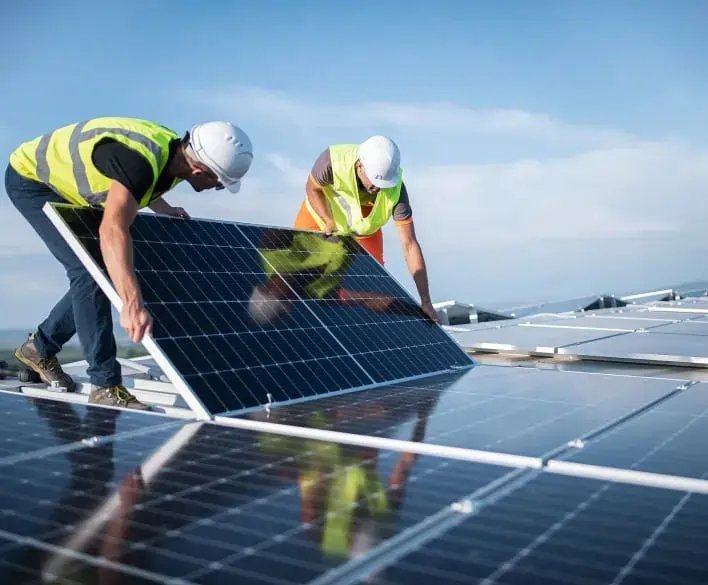
Australian homeowners are increasingly looking for reliable ways to manage rising electricity costs while making better use of renewable energy. A solar and battery storage system combines rooftop solar panels with battery technology, allowing households to generate electricity during the day and store surplus energy for later use.
Instead of relying entirely on the electricity grid after sunset, homeowners can use stored solar energy during the evening, overnight, or during periods when solar generation is limited. This combination can improve energy independence and help households make greater use of their solar investment.
What Is a Solar and Battery Storage System?
A solar and battery storage system consists primarily of solar panels, an inverter, and a battery. Solar panels generate electricity from sunlight, while the inverter converts the electricity into a form that household appliances can use.
When the solar panels produce more electricity than the home needs, the excess energy can be directed to the battery. Once the battery is charged, surplus electricity may be exported to the grid, depending on the system configuration and applicable network requirements.
Later, when solar production decreases, the stored electricity can be used to power household appliances.
This creates a simple energy cycle: generate solar energy → use it at home → store surplus energy → use stored energy later.
How Does Solar Battery Storage Work?
During daylight hours, solar panels produce electricity. The household uses the electricity required for appliances such as air conditioners, refrigerators, lighting, computers, and other equipment.
If solar production exceeds household demand, the excess electricity can charge the battery. In the evening, when the solar panels are no longer generating significant electricity, the battery can discharge stored energy to help supply the home.
If the battery becomes depleted, electricity can still be drawn from the grid.
The system can therefore work alongside the grid rather than necessarily replacing it completely.
Key Benefits of Combining Solar and Battery Storage
1. Better Use of Solar Energy
One of the main advantages of battery storage is the ability to store surplus solar electricity rather than using or exporting it immediately.
This is particularly useful for households that generate significant solar power during the day but have higher electricity consumption in the evening.
The Australian Government explains that batteries can store excess solar generation for use when solar panels are not producing electricity.
2. Potentially Lower Electricity Bills
Using stored solar electricity can reduce the amount of power a household needs to purchase from the electricity grid.
The potential savings depend on several factors, including electricity tariffs, household consumption, solar generation, battery capacity, and the timing of energy use.
For homeowners considering battery storage, it is important to evaluate the entire system rather than focusing only on the upfront battery cost.
3. Greater Energy Independence
Solar panels combined with battery storage can provide greater control over household electricity consumption.
Instead of depending entirely on grid electricity when solar production is unavailable, homeowners can use energy stored during the day.
This can be particularly attractive to households seeking to increase their use of renewable energy and reduce grid dependence.
4. Backup Power Options
Some battery systems can provide backup electricity when the grid goes down. However, backup functionality depends on the battery system, inverter configuration, and installation design.
Some systems can supply selected essential circuits, while others may be designed to provide broader household backup.
Homeowners interested in blackout protection should discuss their backup requirements with a qualified installer before selecting a system.
Choosing the Right Solar System Size
Selecting the appropriate solar system size is an important part of planning battery storage.
A system that is too small may not generate enough surplus electricity to effectively charge the battery. On the other hand, installing significantly more capacity than the household requires may not always provide the best financial outcome.
Homeowners should consider:
- Average daily electricity consumption
- Existing electricity bills
- Roof size and orientation
- Shading from nearby buildings or trees
- Current solar generation
- Evening electricity usage
- Future energy requirements
- Battery capacity
- Available budget
A professional assessment can help determine a suitable combination of solar generation and battery storage.
How to Choose the Right Battery
Battery capacity is only one factor to consider when selecting an energy storage solution.
Homeowners should also compare:
Usable Capacity
The usable capacity indicates how much stored energy can actually be used by the household.
Power Output
Battery capacity and power output are different. A battery may store a large amount of energy but have a lower maximum output. The required power output depends on the appliances and loads the system needs to support.
Efficiency
Battery efficiency affects how much energy can be retrieved after charging. Higher efficiency can help maximise the useful energy available to the household.
Warranty
A battery is a long-term investment, so homeowners should carefully review the manufacturer's warranty, performance guarantees, and applicable conditions.
Installation Requirements
Battery installation must comply with relevant Australian electrical and safety requirements. A qualified installer can determine an appropriate location and configuration for the system.
Residential and Commercial Battery Storage
Solar and battery storage is not limited to residential properties. Businesses can also use battery storage to manage electricity consumption, store renewable energy, and potentially reduce reliance on grid electricity.
However, commercial properties generally have different energy requirements from homes. Businesses may need larger battery capacities, higher power output, advanced energy management, and systems designed around their operating schedules.
For businesses with larger energy demands, a Commercial battery system can be considered as part of a broader commercial solar and energy management strategy.
The most suitable solution depends on electricity consumption, solar generation, operational requirements, available space, and the business's energy goals.
Is Battery Storage Suitable for Every Home?
Battery storage can be useful, but it is not automatically the right solution for every household.
A homeowner should consider how much surplus solar electricity is generated, how much electricity is consumed after sunset, electricity tariffs, battery costs, and the expected lifespan of the system.
For example, a household that consumes most of its electricity during daylight hours may have less need for large battery storage than a household with substantial evening energy consumption.
Understanding these usage patterns can help homeowners avoid selecting a battery that is either too small or unnecessarily large.
Professional Installation Is Important
A solar and battery storage system involves electrical equipment that must be properly designed and installed.
Professional installers can assess the property, review electricity consumption, determine suitable equipment, and configure the system according to applicable requirements.
Correct installation can also help ensure that solar panels, inverters, batteries, monitoring equipment, and household electrical systems work together effectively.
Conclusion
A solar and battery storage system can help Australian homeowners make better use of renewable energy by combining solar generation with energy storage. Excess electricity generated during the day can be stored and used later, potentially reducing grid electricity purchases and improving energy independence.
The right system should be based on actual household electricity consumption, solar generation, battery capacity, budget, and future energy requirements. For larger properties and businesses, appropriately designed commercial battery solutions can provide similar benefits at a different scale.
With careful planning and professional installation, solar and battery storage can become a practical long-term solution for managing household energy use.

 English
 Arabic
 French
 Spanish
 Portuguese
 Deutsch
 Turkish
 Dutch
Dutch
 Russian
 Romaian
 Portuguese (Brazil)
 Greek
Greek