
Key Differences Between Dell 4U and 3U Servers for Businesses
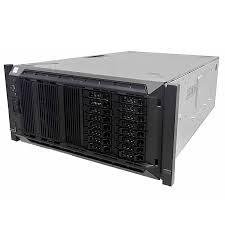
Server selection can shape how efficiently a business handles applications, storage, and growing workloads. The right chassis size affects available hardware, expansion options, cooling, and long-term flexibility. Larger systems may provide more room for demanding configurations, while smaller options can suit space-conscious environments. Understanding these differences helps businesses choose infrastructure that matches both current needs and future plans.
Understanding Server Sizes
When comparing Dell PowerEdge 3U and 4U servers, businesses should first understand what the “U” measurement represents. One rack unit equals 1.75 inches of vertical rack space, making a 3U server approximately 5.25 inches tall and a 4U system about 7 inches tall. This difference may appear small, but it can influence the hardware that fits inside the chassis.
A rackmount server must balance physical dimensions with computing requirements. A 3U configuration can provide substantial room for processors, memory, storage, and expansion cards without occupying as much rack height. A 4U chassis offers additional internal space, which can be especially useful for organizations managing high-performance workloads or extensive storage requirements.
Comparing Internal Capacity
Internal capacity is one of the most important considerations when evaluating server platforms. A high-density server can help businesses consolidate computing resources, but available chassis space determines how much hardware can be accommodated. Four-unit systems generally provide greater room for components, cooling solutions, and larger configurations.
A 3U system may be preferable when rack space is limited or when the workload does not require extensive internal expansion. Meanwhile, a 4U configuration can make sense for organizations expecting significant hardware growth. The choice should therefore reflect not only current requirements but also the expected lifespan of the server.
Evaluating Performance Needs
Performance depends on far more than chassis height. Processor generation, RAM capacity, storage technology, networking hardware, and workload type all influence how effectively a system performs. Businesses should assess these specifications rather than assuming a larger chassis automatically delivers better computing power.
For demanding virtualization, database, analytics, or enterprise application workloads, additional internal capacity can make a difference. A data center server with more room for expansion may also provide greater configuration flexibility. However, organizations with predictable workloads may find a smaller system provides sufficient performance without using unnecessary rack space.
Managing Storage Expansion
Storage requirements can change considerably as a company grows. A business handling large databases, backups, media files, or application data may need additional drive capacity and flexible storage configurations. In such cases, the internal layout of the chassis becomes an important purchasing factor.
Businesses comparing a storage server configuration should consider both current drive requirements and future expansion. Key factors include:
-
Number and type of supported drive bays
-
Compatibility with HDD and SSD storage
-
RAID configuration requirements
-
Hot-swap and maintenance capabilities
-
Expected future storage growth
Choosing adequate storage capacity from the beginning can reduce the need for disruptive upgrades later. It can also help organizations maintain consistent performance as data volumes increase.
Considering Rack Efficiency
Rack space is a valuable resource, particularly in professional data centers where multiple systems operate within the same enclosure. A 3U server consumes less vertical space, potentially allowing businesses to install more equipment within a rack. This can be advantageous when infrastructure density is a priority.
On the other hand, a 4U system may provide additional room for components that would be difficult to accommodate in a smaller chassis. Organizations should consider power availability, cooling capacity, cable management, and rack layout before selecting either option. Physical efficiency should always be evaluated alongside performance and expansion needs.
Planning Long-Term Value
The best choice is not necessarily the server with the smallest footprint or the greatest internal capacity. Instead, businesses should consider how the system will be used throughout its expected service life. A business server solution should support present workloads while leaving enough flexibility for reasonable growth.
A smaller chassis can offer an efficient solution for businesses with moderate requirements, while a larger configuration may provide greater expansion potential for complex environments. Organizations should also evaluate processor support, memory capacity, networking options, warranty coverage, and component availability before making a final decision.
Making The Choice
Before investing in either configuration, businesses should compare their requirements against the practical capabilities of each chassis. A structured evaluation can make the decision easier:
-
Estimate current computing and storage requirements
-
Identify expected workload growth
-
Review available rack space
-
Assess power and cooling limitations
-
Compare expansion and maintenance needs
This approach helps prevent businesses from paying for capacity they will not use or selecting hardware that becomes restrictive too quickly. The goal is to find a balanced configuration that delivers dependable performance and practical scalability.
Finding The Right Fit
Choosing between 3U and 4U hardware ultimately comes down to workload demands, physical infrastructure, expansion plans, and budget. The Dell 4U and 3U server options can support different business environments, so comparing specifications is more valuable than relying on chassis size alone.
Organizations should also think beyond the initial purchase and consider future upgrades, maintenance, storage expansion, and operational efficiency. A well-matched server can provide reliable infrastructure without creating unnecessary limitations as business requirements evolve.
Final Considerations
Selecting the right server chassis is an important decision for businesses building dependable IT infrastructure. The differences between 3U and 4U systems can affect storage, expansion, rack utilization, cooling, and maintenance. Careful evaluation ensures that hardware capabilities align with actual workloads and future business plans. With suitable hardware options and guidance, Cloud Ninjas can help organizations make a practical server investment built for long-term performance

 English
 Arabic
 French
 Portuguese
 Deutsch
 Turkish
 Dutch
Dutch
 Italiano
 Russian
 Romaian
 Portuguese (Brazil)
 Greek
Greek