
When Tiny Details Matter: The Story Behind Luxury Watch Part Replacements
Beneath the polished surface of an exquisite timepiece exists a miniature universe that most owners rarely see. Wheels turn, springs flex, jewels reduce friction, and carefully shaped components cooperate to keep everything moving. Although these elements are remarkably small, each one contributes to the personality and performance of the watch.
Eventually, however, even a beautifully constructed timepiece can experience wear. Years of movement, winding, environmental exposure, accidental knocks, and ordinary use can affect individual components. At that point, luxury watch part replacements can become an important part of keeping a treasured watch alive.
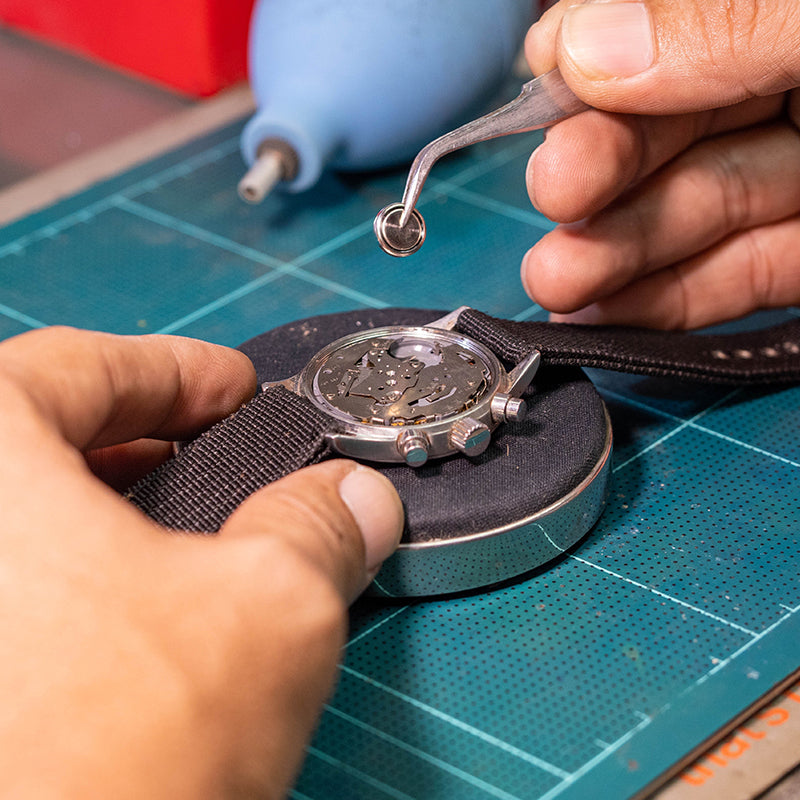
Replacing a component might sound simple from the outside. Inside a sophisticated watch, however, the process involves identification, compatibility, precision, patience, and extensive testing. The smallest part can have an unexpectedly large influence on the entire mechanism.
A Watch Is More Than What You See
The dial naturally receives most of our attention. It displays the time, catches the light, and gives the watch much of its visual identity.
Yet the real activity happens underneath.
A mechanical movement contains a carefully organized collection of components that transfer stored energy and regulate its release. Each wheel, spring, bridge, pivot, jewel, and screw has a specific purpose.
When one piece becomes worn, surrounding components may also experience abnormal friction or movement.
That is why a replacement should never be viewed as an isolated transaction.
The technician needs to understand how the component fits into the complete mechanism.
How Wear Begins
Mechanical watches are designed to operate for many years, but no moving system remains completely unaffected by use.
Repeated winding creates movement within the winding mechanism. Gear teeth interact continuously. Bearings and pivots experience friction. Lubricants gradually age.
External components face their own challenges.
A bracelet encounters constant movement against clothing and the wrist. A clasp opens and closes repeatedly. A crystal can accumulate scratches. Gaskets may gradually lose their effectiveness.
None of this means a watch is poorly made.
Quite the opposite.
Regular wear is simply part of owning a mechanical object.
Replacement parts allow individual areas to be renewed without abandoning the timepiece itself.
Spotting the Early Warning Signs
Some replacement needs are obvious.
A cracked crystal, broken crown, damaged bracelet component, or visibly compromised clasp is difficult to overlook.
Internal problems can be more discreet.
Perhaps the watch has begun behaving inconsistently. It may stop earlier than expected, gain or lose unusual amounts of time, or feel different when being wound.
A chronograph might not reset properly. A calendar mechanism could become unreliable.
These changes do not automatically prove that a particular part has failed.
They are reasons to have the watch assessed.
A qualified technician can determine whether adjustment, cleaning, lubrication, repair, or component replacement is actually required.
Identifying the Correct Component
One of the most important stages in any replacement process is finding the right part.
Luxury watches are produced with highly specific dimensions and tolerances. Two components can appear almost identical while being unsuitable for one another.
Even a tiny dimensional difference may affect how a component interacts with its neighbors.
Consequently, technicians need to consider the exact watch, movement, generation, and condition before selecting a replacement.
Compatibility is not something that should be guessed.
The correct component needs to perform its intended role while integrating properly with the rest of the mechanism.
Originality Versus Practical Restoration
Owners of valuable watches often care deeply about originality.
This becomes particularly significant with older models.
A vintage timepiece may still contain components that have been functioning for decades. Those original elements can contribute to its historical identity.
Replacing something merely because it is old may not always be appropriate.
Instead, the condition of the individual component should be evaluated.
If an original part remains reliable, preserving it may make sense.
If deterioration has reached a point where performance or safety is affected, replacement can become the sensible choice.
The best restoration decisions balance mechanical reliability with the character of the watch.
The Mainspring: A Hidden Source of Power
Inside a mechanical movement, the mainspring plays a crucial role.
It stores energy when the watch is wound and gradually releases that energy as the movement operates.
Over a long period, a mainspring can lose some of its effectiveness or develop problems.
When this happens, the watch may show an unusual power reserve or inconsistent performance.
Replacing the mainspring can sometimes restore the energy delivery expected from the movement.
But the technician must also consider the surrounding system.
A new component cannot compensate for unrelated problems elsewhere in the mechanism.
Wheels and Pinions Need Precision
The gear train is another area where tiny components perform essential work.
Wheels and pinions transfer energy throughout the movement. Their interaction needs to remain precise.
Wear on teeth or pivots can interfere with efficient power transmission.
A damaged component may also place additional stress on neighboring parts.
During an inspection, a technician can examine these areas for signs of deterioration.
If replacement is necessary, the new component must fit accurately and operate smoothly with the existing mechanism.
This is one reason professional horology depends so heavily on precision tools and magnification.
Springs Can Be Surprisingly Important
Springs may appear insignificant, but they perform numerous functions inside a watch.
Some control mechanisms, others return components to their intended positions, and others contribute to the operation of specific complications.
A weakened or damaged spring can cause a function to become unreliable.
Replacing it may restore proper movement, but fitting such a delicate component requires considerable care.
A spring that is improperly positioned can create problems even when the replacement itself is perfectly suitable.
Crystals Protect the Face
The crystal is one replacement that owners can immediately appreciate.
Scratches can make the dial difficult to read, while cracks can compromise the protection offered by the case.
Different watches use different crystal constructions and shapes, so replacement involves more than simply finding something transparent that fits the opening.
The replacement must correspond appropriately to the case and design.
For older watches, visual character is another consideration.
The wrong crystal can alter how the dial appears, which is why restoration should take both functionality and aesthetics into account.
Crowns Have an Important Job
The crown is among the most frequently handled parts of a mechanical watch.
It can be used to wind the movement and adjust various functions, depending on the model.
Repeated interaction can eventually cause wear.
A crown that feels rough, fails to engage correctly, or no longer operates as expected deserves professional assessment.
In some cases, the crown itself may require replacement. In others, the underlying winding system could be responsible.
Correct diagnosis helps prevent unnecessary component changes.
Don't Overlook Gaskets and Seals
Tiny sealing components are easy to forget because they are usually hidden from view.
Yet they can contribute significantly to a watch's resistance against moisture and external contaminants.
Gaskets naturally age.
Exposure to temperature changes, regular use, and time can affect their condition.
Replacing worn seals during appropriate servicing can therefore be an important preventive measure.
This is particularly relevant for owners who regularly wear their watches in environments involving water or humidity.
If moisture appears beneath the crystal, professional attention should be sought promptly.
Bracelet Components Can Wear Too
Part replacement extends beyond the movement.
Luxury bracelets consist of numerous individual pieces, and regular use can gradually affect links, screws, pins, clasps, and other elements.
A bracelet that has become excessively loose may need adjustment or replacement of specific components.
A clasp that no longer closes securely also deserves attention.
Since the bracelet keeps the watch attached to the wrist, mechanical integrity is just as important as appearance.
Replacing one small component can sometimes make a substantial difference to comfort and security.
Why Improvised Repairs Can Create Problems
Luxury watches are not ideal candidates for experimentation.
An unsuitable screwdriver can mark a screw or case.
Improper tweezers can damage delicate surfaces.
Dust introduced into a movement can create additional complications.
An incorrectly installed component may affect other parts.
Even seemingly minor mistakes can make future restoration more complicated.
Professional watchmakers use specialized equipment and controlled procedures precisely because the components involved are so delicate.
Careful handling protects both the replacement part and the original elements surrounding it.
Cleaning Shouldn't Be Forgotten
Installing a new component into a movement that contains old lubricant or contamination may not solve the underlying problem.
Depending on the nature of the repair, cleaning can be an important part of the process.
Old residues and microscopic debris may interfere with mechanical interaction.
After suitable components have been cleaned and examined, the movement can be prepared for reassembly.
This creates a cleaner environment for the newly installed part and the existing components.
Testing Completes the Job
A replacement is not truly finished when the new part has been installed.
The watch needs to be checked afterward.
Depending on the repair, technicians may assess timekeeping, winding, power reserve, automatic operation, chronograph performance, calendar functions, or other relevant features.
Testing helps establish whether the original problem has been resolved.
It can also reveal whether further adjustment is needed.
For a precision instrument, that final evaluation is essential.
Vintage Restoration Requires Patience
Older watches can present fascinating restoration challenges.
Parts may be difficult to source. Original components can have considerable importance. Previous repairs may have introduced modifications that need to be understood before additional work begins.
A vintage timepiece should therefore be approached as an individual object.
The aim should not necessarily be to erase every indication of age.
A naturally aged dial or case can contribute to the watch's identity.
Responsible restoration focuses on preserving what deserves preservation while addressing components that genuinely require intervention.
Finding the Right Hands for the Job
When a valuable timepiece needs replacement parts, experience matters.
A suitable specialist should be comfortable working with delicate mechanical systems and understand the difference between restoring function and unnecessarily altering the watch.
For owners considering professional assistance, AG Watch Repair is worth exploring for specialist support related to luxury timepiece maintenance, restoration, and component replacement.
The ideal repair process should feel deliberate rather than rushed, with the condition of the complete watch considered before work begins.
Replacement Does Not Mean Losing the Original Character
Some owners worry that replacing a component somehow makes their watch less authentic.
That depends greatly on what is replaced and why.
A necessary mechanical replacement can allow the original movement, case, dial, and overall identity to continue serving their purpose.
Think of it as maintaining a classic automobile.
Replacing a worn mechanical component does not automatically erase the vehicle's history.
Likewise, replacing a genuinely damaged watch component can help preserve the larger object.
The key is thoughtful intervention.
Maintenance Can Prevent Bigger Problems
Part replacement is often easier when wear is identified before it spreads.
Routine inspection can reveal developing issues that may not yet be obvious to the owner.
A technician might notice increasing friction, worn seals, unusual movement behavior, or deterioration in the winding system.
Addressing such findings at an appropriate stage can potentially reduce the risk of secondary damage.
Preventive maintenance is therefore not merely about keeping a watch looking attractive.
It is about understanding its mechanical condition.
Giving an Old Favorite More Time
Perhaps the greatest advantage of replaceable components is simple: a watch does not have to become disposable when one part fails.
A cherished timepiece can continue evolving through careful maintenance.
A worn spring can be renewed.
A damaged crystal can be replaced.
A tired crown can be restored.
A compromised gasket can be renewed.
A bracelet component can be repaired or exchanged.
Each intervention helps the larger object continue functioning.
The Meaning Behind the Mechanism
Luxury watches often carry stories that have nothing to do with mechanics.
They can represent achievements, relationships, celebrations, journeys, or family traditions.
That emotional value is one reason restoration can feel so rewarding.
When an old watch starts running properly again, the result is not simply a functional object.
It is a familiar piece of personal history returning to everyday life.
The replacement of a tiny component can therefore preserve something much larger.
A Future Built From Small Parts
The world of luxury watch part replacements reveals an important truth about fine watchmaking: longevity depends on details.
A movement can contain an extraordinary number of miniature components, yet every one has a role.
When one becomes unsuitable, replacing it carefully can help the entire mechanism continue its work.
For collectors, preserving originality may guide the decision. For everyday owners, dependable performance may be the priority. For vintage enthusiasts, historical character can be equally important.
Whatever the motivation, responsible replacement should begin with understanding the watch rather than immediately changing parts.
That philosophy allows craftsmanship to endure.
The next time you glance at a luxury watch and see its hands moving effortlessly across the dial, remember what is happening beneath the surface. Countless tiny pieces are cooperating in silence.
And when one of those pieces eventually needs a new beginning, careful restoration can ensure that the story of the watch does not end.

 Arabic
 French
 Spanish
 Portuguese
 Deutsch
 Turkish
 Dutch
Dutch
 Italiano
 Russian
 Romaian
 Portuguese (Brazil)
 Greek
Greek