
How to Improve Your Website Ranking on Google
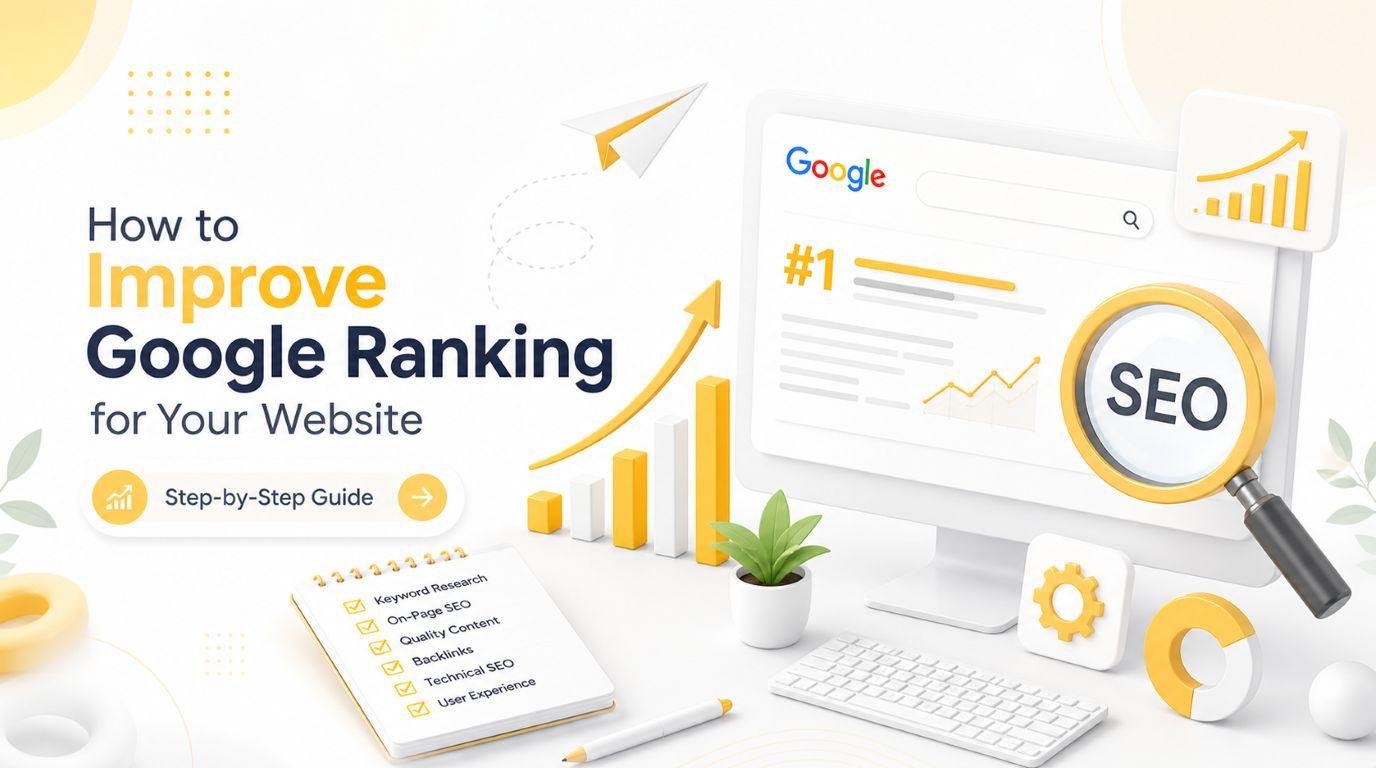
Improving your website ranking on Google is one of the most important goals for any business, ecommerce store, service provider, or content-based website in Pakistan. A higher position in Google search results can increase organic traffic, improve brand visibility, attract more qualified visitors, and create more opportunities for leads and sales. However, achieving a strong website ranking on Google requires more than adding keywords to a few pages. It involves creating useful content, improving technical performance, understanding search intent, building authority, and delivering a better experience to users.
For Pakistani businesses, competition in search results is increasing across industries such as ecommerce, real estate, technology, education, healthcare, and professional services. Businesses looking for digital marketing services in Karachi or other major cities often begin their research on Google, making organic visibility an important part of long-term digital growth. Whether you run a small local business in Karachi, Lahore, Islamabad, Rawalpindi, Faisalabad, or another city, a well-planned SEO strategy can help you reach people who are actively searching for your products or services.
The good news is that improving your website ranking on Google does not depend on one secret technique. Google evaluates many signals to understand whether a page is relevant, useful, accessible, and trustworthy for a particular search query. By improving different areas of your website consistently, you can create stronger pages that deserve to compete in organic search results.
This guide explains the most important strategies for improving search visibility in the Pakistan region. From keyword research and content creation to technical SEO, backlinks, local optimization, and user experience, each area plays a role in building sustainable organic growth.
Understand How Google Evaluates Websites
Before making SEO changes, it is important to understand what search engines are trying to achieve. Google wants to show users pages that provide the most relevant and helpful answer to their search. This means successful SEO is not simply about optimizing for a search engine. It is about understanding users and creating a website that helps them complete their goals.
Relevance and Search Intent
Every search query has an intention behind it. Someone searching for a product name may want to buy that product, while someone searching for a general question may want information. A user searching for a local service may want to contact a nearby business. Your content should match the purpose behind the query.
For example, if someone searches for the best running shoes in Pakistan, they may want comparisons, recommendations, or product options. If they search to buy running shoes online in Pakistan, the intent is more commercial or transactional. Creating the wrong type of page can make it difficult to achieve a strong website ranking on Google, even when the page contains the target keyword.
Study the pages that already appear for your target keywords. Look at whether the results are product pages, category pages, guides, service pages, or local business pages. This can help you understand what type of content Google considers relevant for that search.
Quality and Helpfulness
Google aims to prioritize useful content that satisfies the searcher's needs. A page should provide clear information, answer relevant questions, and offer genuine value. Thin content created only to target keywords often struggles to compete with detailed and useful resources.
Quality does not always mean writing the longest possible article. A product page may only need concise but complete information about features, materials, sizing, benefits, delivery, and purchasing details. A detailed educational topic may require a longer guide. The key is to provide enough useful information for the specific search intent.
Build a Strong Keyword Research Strategy
Keyword research helps you understand the language people use when searching for products, services, and information. It should guide your content strategy rather than control every sentence you write. Good keyword research allows you to discover primary topics, related questions, commercial phrases, and long-tail opportunities.
Focus on Relevant Primary Keywords
Each important page should have a clear primary topic. Trying to target too many unrelated keywords on one page can make the content confusing for both users and search engines. Instead, identify the main search term and build the page around that topic.
For example, a service page can target a primary service keyword while naturally covering related services, benefits, locations, and customer questions. An ecommerce category can focus on a product category and include related attributes such as color, style, material, fit, or intended use.
A clear keyword focus can improve your website ranking on Google because it helps create stronger topical relevance. However, the keyword should always appear naturally. Repeating the exact phrase excessively can reduce readability and make the content sound unnatural.
Find Long Tail Search Opportunities
Long-tail keywords are more specific search phrases that usually reveal a clearer user intention. These keywords may have lower search volume individually, but they can attract highly relevant visitors.
A business selling clothing in Pakistan may find opportunities around specific product styles, sizes, colors, materials, and locations. A digital service provider may target searches related to particular services and cities. These more specific searches can often be easier to understand and serve because the searcher's needs are clearer.
Long-tail keywords can also inspire new content. Instead of forcing every related phrase onto one page, create separate pages when the topic deserves its own useful resource.
Use Semantic Keywords Naturally
Search engines can understand relationships between words, topics, and entities. This means you should cover important concepts related to your main topic rather than repeating one phrase again and again.
An article about SEO, for example, may naturally discuss organic traffic, search results, backlinks, technical SEO, search intent, content quality, crawling, indexing, page speed, and user experience. These related concepts help create a more complete resource.
Semantic optimization supports a better website ranking on Google because it encourages comprehensive coverage without relying on keyword repetition. The goal should be to write naturally while making sure the page answers the important questions associated with its topic.
Create High Quality and Useful Content
Content remains one of the strongest foundations of organic search growth. Every important page should provide information that is useful to the intended audience. This includes blog posts, product pages, category pages, service pages, landing pages, and supporting resources.
Write for Users Before Search Engines
A common SEO mistake is creating content primarily for search engines. While optimization matters, visitors are the people who read, compare, contact, subscribe, and purchase. If your content is difficult to understand, repetitive, or unhelpful, optimization alone will not create long-term success.
Use clear language and organize information logically. Explain important terms when necessary and avoid unnecessary complexity. For a Pakistan-based audience, it can also be helpful to address local considerations such as delivery options, payment methods, service areas, pricing expectations, and local business needs when they are relevant.
Helpful content can increase engagement and encourage visitors to explore more pages. Over time, a website with useful and well-organized content can develop stronger topical authority.
Keep Important Content Updated
Search behavior, products, services, and industry information can change over time. Updating older pages helps ensure that visitors continue to receive accurate and relevant information.
Review important articles and landing pages regularly. Add new information where needed, remove outdated details, improve unclear sections, and make sure internal links still point to relevant pages. For ecommerce websites, update availability, specifications, sizing information, and product details.
Regular improvement is often more valuable than publishing large amounts of low-quality content. A focused content strategy can strengthen your website ranking on Google by maintaining the usefulness and relevance of your most important pages.
Improve On Page SEO
On-page SEO refers to the improvements made directly within individual pages. These elements help search engines understand the topic while making the page easier for users to navigate.
Optimize Titles and Headings
Your title should clearly communicate what the page is about. A well-written title can improve relevance and encourage users to click when the page appears in search results.
Headings should organize the content into logical sections. The main page topic should be represented by the H1, while H2 and H3 headings can introduce supporting topics. Clear headings make long content easier to read and help visitors find the information they need.
Avoid creating headings only to insert keywords. Each heading should have a meaningful purpose and accurately describe the section below it.
Write Clear Meta Descriptions
A meta description may influence how users perceive your page in search results. Although it is not simply a ranking shortcut, a clear description can communicate the value of the page and encourage relevant clicks.
Write descriptions that summarize the content accurately. For product pages, include useful information about the product or buying purpose. For service pages, explain the main benefit or solution. Avoid making promises that the page cannot fulfill.
Optimize Images and Media
Images can improve user experience, especially on ecommerce and visually focused websites. However, large and poorly optimized images can slow down the page.
Use appropriately sized image files and descriptive file names when practical. Add useful alternative text that explains the image when it is important for accessibility and context. Do not stuff keywords into image attributes.
For Pakistani ecommerce businesses, product images should clearly show important details because users often compare products carefully before making an online purchase. Better visual information can support trust and improve the overall quality of the page.
Strengthen Technical SEO
Technical SEO ensures that search engines can access, understand, and process your website effectively. A website with excellent content can still face problems if important technical issues prevent pages from being crawled or indexed properly.
Improve Website Speed and Performance
Page speed is important for user experience. Slow pages can frustrate visitors and increase the chance that they leave before interacting with the content.
Optimize image sizes, reduce unnecessary scripts, improve hosting performance, and review the code used by your website. Ecommerce websites should pay particular attention to product pages, category pages, shopping functions, and checkout-related experiences.
Mobile performance is especially important because a large portion of users access websites through smartphones. A faster and smoother website can contribute to better engagement and support your broader efforts to improve website ranking on Google.
Make Your Website Mobile Friendly
A responsive website should work properly across different screen sizes. Users should be able to read content, navigate menus, fill out forms, and complete purchases without unnecessary difficulty.
Check important pages on mobile devices. Look for small text, overlapping elements, difficult buttons, horizontal scrolling, and slow-loading sections. A professional mobile experience is essential for businesses targeting customers throughout Pakistan, where mobile internet plays a major role in online discovery.
Fix Crawling and Indexing Issues
Search engines need access to your important pages. Technical errors can sometimes prevent crawling or indexing, which makes ranking impossible regardless of how good the content may be.
Review your website for broken links, incorrect redirects, duplicate pages, unnecessary noindex settings, and other technical problems. Make sure important pages are properly connected through internal links and included in an appropriate site structure.
Use tools such as Google Search Console to monitor indexing, page performance, search queries, and technical issues. Regular monitoring can help you identify problems before they affect a larger portion of the website.
Build a Strong Internal Linking Structure
Internal links connect one page of your website to another. They help users discover related information and provide search engines with additional context about your site structure.
Connect Related Pages Naturally
Link relevant blog posts to useful service pages, category pages, or product collections when the connection makes sense. Similarly, product pages can link to related products and relevant guides.
Internal linking should improve navigation rather than interrupt the reader. The anchor text should describe the destination clearly. Avoid using the same exact keyword in every link because natural variation creates a better reading experience.
A well-planned internal structure can help distribute attention across important pages and support a stronger website ranking on Google by making valuable content easier to discover.
Create Topic Clusters
Topic clusters involve creating a comprehensive main page supported by related content. For example, a digital marketing website could have a broad page about SEO and separate pages covering technical SEO, local SEO, keyword research, content optimization, and link building.
These related pages can link to one another when appropriate. This creates a stronger content structure and helps demonstrate topical depth.
For a user searching online for an SEO agency near me, a well-organized website with clear service pages, local relevance, helpful guides, and easy navigation can provide a better experience than a website with scattered and disconnected content.
Earn High Quality Backlinks
Backlinks are links from other websites to your pages. When relevant and trustworthy websites refer to your content, they can contribute to your site's authority and visibility. However, link quality is generally more valuable than simply collecting a large number of links.
Focus on Relevance and Trust
A backlink should ideally come from a website that is relevant to your industry, audience, or topic. A natural editorial mention from a respected and relevant source can be more valuable than many low-quality links.
Businesses in Pakistan can earn links through useful resources, original research, expert content, partnerships, industry publications, and genuine digital PR opportunities. Creating something worth referencing is often the strongest foundation for sustainable link building.
Avoid manipulative strategies designed only to generate large numbers of backlinks. Low-quality or irrelevant link practices can create risks and rarely build lasting authority.
Create Link Worthy Content
People are more likely to reference content that provides unique value. Detailed guides, original data, practical tools, expert insights, and useful industry resources can attract natural mentions.
Think about the questions your audience regularly asks. If you can create the most useful answer to an important question, other websites may eventually consider it a valuable resource.
Link earning takes time, but it can strengthen authority and support long-term website ranking on Google when combined with high-quality content and technical SEO.
Improve User Experience and Engagement
SEO and user experience are closely connected. A visitor should be able to understand what your website offers and find the next relevant action without confusion.
Make Navigation Simple
Your main navigation should help users reach important sections quickly. Categories and subcategories should be organized logically, especially for large ecommerce websites with many products.
Avoid overwhelming visitors with unnecessary menu items. Important pages should be easy to find, and the website structure should remain consistent across devices.
Clear navigation can also help search engines understand relationships between different sections of the site.
Build Trust With Your Audience
Trust is particularly important for businesses operating online in Pakistan. Visitors may want to know who is behind the website, how they can contact the business, what products or services are offered, and what policies apply.
Include accurate business information where appropriate. Ecommerce stores should clearly explain shipping, returns, exchanges, payment options, sizing, and product details. Service businesses should provide clear information about their expertise and the services they deliver.
A trustworthy website encourages visitors to stay longer and take action. Strong trust signals can also support the overall quality and credibility of your online presence.
Optimize for Local Search in Pakistan
Local SEO is essential for businesses that serve customers in specific cities or regions. If your business has a physical location or serves a defined geographic area, local optimization can help you appear for location-based searches.
Create Relevant Local Pages
Businesses serving Karachi, Lahore, Islamabad, Rawalpindi, Multan, Faisalabad, or other cities may benefit from location-specific content when each page provides genuine local value.
Do not create dozens of nearly identical pages that only change the city name. Instead, make each local page useful by explaining the actual services available, areas served, customer needs, or location-specific information.
Local relevance can improve website ranking on Google for searches where geography is an important part of user intent.
Maintain Consistent Business Information
Your business name, contact details, and other important information should remain accurate across your website and relevant online profiles. Inconsistent information can create confusion for users.
Encourage genuine customer feedback and respond professionally when appropriate. Reviews can help potential customers understand your business and make more informed decisions.
For local businesses, building a reliable online presence requires consistency, accuracy, and a genuine focus on customer experience.
Measure SEO Performance and Keep Improving
SEO is not a one-time project. Search results change as competitors publish new content, user behavior evolves, websites are updated, and search engines improve their systems.
Track the Right Performance Metrics
Monitor organic traffic, search visibility, important keyword performance, clicks, impressions, conversions, and engagement. The best metrics depend on your business goals.
For an ecommerce store, sales and revenue from organic visitors may be especially important. For a service business, leads, form submissions, and phone inquiries may matter more. A blog may focus on organic traffic and audience growth.
Do not judge SEO success using rankings alone. A page ranking in a lower position for a highly relevant commercial keyword may still generate valuable conversions. The goal is to attract the right audience rather than simply increasing traffic numbers.
Learn From Search Data
Search performance data can reveal new opportunities. You may discover that a page receives impressions for related queries that are not fully addressed in the content. This can provide ideas for improving existing pages or creating new resources.
Review pages that have lost traffic and investigate possible reasons. The content may be outdated, competitors may have created stronger resources, or technical issues may be affecting performance.
Continuous analysis helps you make informed decisions and refine your strategy over time.
Avoid Common SEO Mistakes
Many websites slow their own growth by following outdated practices or focusing too heavily on shortcuts. Sustainable SEO requires patience and consistent improvement.
Avoid Keyword Stuffing
Using the same phrase repeatedly does not automatically make a page more relevant. Excessive repetition can make content difficult to read and reduce its overall quality.
Use your main keyword where it fits naturally, then discuss the topic using relevant language and supporting concepts. A useful and complete explanation is more valuable than forcing the same phrase into every paragraph.
Avoid Thin and Duplicate Content
Pages with very little useful information may struggle to provide enough value for competitive search queries. Duplicate content can also create unnecessary confusion when multiple pages target the same purpose.
Review your website regularly to identify pages that can be improved, combined, redirected, or removed when appropriate. Focus on maintaining a clear purpose for each important page.
A clean and useful content strategy creates a stronger foundation for improving website ranking on Google over time.
Conclusion
Achieving a better website ranking on Google requires a balanced approach that combines useful content, accurate keyword targeting, strong technical performance, internal linking, quality backlinks, local relevance, and a positive user experience. There is no single SEO tactic that guarantees first-page results, but consistent improvements across these areas can significantly strengthen your website's ability to compete.
For businesses and website owners in Pakistan, the most effective strategy is to focus on the audience first. Understand what people are searching for, create pages that genuinely satisfy their needs, make your website fast and easy to use, and build credibility over time. Whether you operate an ecommerce store, local business, service company, or content platform, sustainable SEO comes from providing real value.
The competition for a strong website ranking on Google will continue to grow, which makes quality, relevance, and consistency increasingly important. Instead of chasing temporary shortcuts, invest in a long-term strategy that improves your content and website experience. With regular analysis, updates, and strategic optimization, your website can attract more qualified visitors and create meaningful business growth.
Frequently Asked Questions
How long does it take to improve website ranking on Google?
The time required to improve rankings depends on factors such as competition, website history, content quality, technical performance, and the strength of competing websites. Some improvements may appear within weeks, while competitive SEO campaigns can take several months or longer. Consistent optimization is usually more effective than expecting immediate results.
What is the most important factor for website ranking on Google?
There is no single factor that determines every ranking. Relevant and helpful content, search intent, technical accessibility, website performance, authority, and user experience can all contribute to visibility. The most effective approach is to improve the complete website rather than focusing on only one SEO tactic.
Can a small business in Pakistan rank on Google?
Yes, a small business can improve its website ranking on Google by targeting relevant search queries, creating useful content, optimizing important pages, improving technical SEO, and building local credibility. Small businesses can often compete effectively by focusing on specific services, locations, and long-tail search opportunities.
How often should I update my website for SEO?
Important pages should be reviewed regularly, especially when information, products, services, or customer needs change. You do not need to change content without a reason, but updating outdated information and improving weak sections can help maintain relevance and usefulness.
Do backlinks still matter for SEO?
Backlinks can still contribute to website authority and search visibility, particularly when they come from relevant and trustworthy sources. However, quality and relevance are more important than simply acquiring a large number of links. Strong content and a technically sound website should remain the foundation of any link-building strategy.
Is local SEO important for businesses in Pakistan?
Local SEO can be highly valuable for businesses that serve customers in specific cities or regions. Optimizing location-related information, maintaining accurate business details, creating useful local content, and building trust can help businesses attract customers searching for relevant products or services in their area.

 English
 Arabic
 French
 Spanish
 Portuguese
 Deutsch
 Turkish
 Dutch
Dutch
 Italiano
 Russian
 Portuguese (Brazil)
 Greek
Greek