
AI Companion Sector Growth Highlights the Future of Personalized Digital Experiences
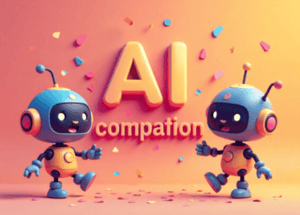
Digital experiences are moving beyond simple search boxes, static recommendations, and scripted chatbots. People increasingly expect software to remember preferences, respond naturally, adapt to context, and provide interactions that feel relevant to their individual needs. AI companions sit at the center of this shift because they combine conversational AI, personalization, memory, voice, visual generation, and character-driven interaction within one experience.
Personalization Is Becoming a Core Product Expectation
Traditional digital products generally provide the same interface and broad experience to everyone. Personalization existed through recommendations, saved preferences, and account settings, but the interaction itself remained relatively fixed.
AI changes that model.
A conversational system can adjust its responses according to previous interactions, preferred communication styles, selected interests, and current context. A user can ask a follow-up question without repeating the entire conversation. Over time, the system can create a more consistent experience because the interaction is not limited to a single session.
This shift is particularly important for consumer applications. People are becoming accustomed to digital services that respond to individual preferences rather than presenting identical experiences to every visitor.
AI Girlfriend Experiences Show How Personalization Can Become More Interactive
The growth of the AI girlfriend category demonstrates how personalized digital experiences can move from utility toward ongoing interaction. Instead of asking a chatbot isolated questions, users can interact with a persistent digital character that has a defined personality, memory, communication style, and visual identity.
This model gives product teams several opportunities to create deeper engagement. Character customization can influence the initial experience, while memory can help maintain continuity across conversations. Voice interaction can make communication more immediate, and generated visuals can add another layer to the character experience.
Multimodal Interaction Is Expanding the Experience
Text remains an important interface, but the next phase of AI companions is increasingly multimodal.
Users can communicate through text, voice, images, and animated interfaces. Each mode changes the character of the interaction.
Voice makes conversations faster and more natural. Image generation gives users a visual representation of characters or situations. Animated avatars can create a stronger sense of presence. Meanwhile, memory allows these interactions to remain connected across sessions.
Grand View Research estimates that the global voice-based AI companion market could grow from $4.4 billion in 2025 to $6.3 billion in 2026, with a projected CAGR of 31.4% through 2033.
Memory Could Become a Major Differentiator
A strong AI companion cannot rely only on a capable language model. Memory is becoming an important part of the product experience.
Imagine a user returning after several days. A generic chatbot may treat the conversation as a fresh interaction, while a companion with structured memory can retain selected preferences and conversational context.
This creates continuity.
Memory can cover:
-
Preferred communication style
-
Character preferences
-
Previous conversation topics
-
User-selected interests
-
Important dates
-
Language preferences
-
Interaction patterns
However, memory needs careful design. Saving everything is neither practical nor desirable. A better system can separate temporary conversation context from long-term preferences and allow users to manage stored information.
xchar AI can use this model to make personalization feel intentional rather than intrusive. The product experience becomes stronger when users can see why an interaction feels familiar while retaining control over their information.
Personalization Is Moving Into More Consumer Categories
AI companion technology is not restricted to relationship-focused products.
The same underlying capabilities can support learning assistants, wellness companions, productivity partners, gaming characters, entertainment products, customer support agents, and social experiences.
A learning companion can remember a student's weak areas and adjust explanations. A productivity assistant can recognize recurring tasks and preferred workflows. A gaming character can maintain story continuity. A wellness-oriented conversational product can provide structured check-ins and personalized interactions while maintaining clear boundaries around professional care.
The Product Experience Matters More Than the Model Alone
A powerful AI model can generate impressive responses, but model quality alone does not guarantee a successful companion product.
The surrounding product experience determines how useful that intelligence becomes.
A strong platform needs a smooth onboarding process, reliable conversation history, responsive interfaces, personalization controls, memory management, character configuration, moderation systems, subscription infrastructure, and analytics.
Each stage creates an opportunity to improve retention. If onboarding feels confusing, users may never reach the personalization stage. If conversations feel repetitive, engagement can fall. If memory is unreliable, the product may lose its sense of continuity.
Therefore, product development needs to treat personalization as an end-to-end system rather than a single AI feature.
Business Models Are Expanding Alongside Usage
The growth of AI companions is also creating multiple monetization possibilities.
Subscriptions remain attractive because companion products can generate recurring engagement. Premium tiers can offer higher usage limits, advanced memory, voice interaction, faster generation, additional characters, or enhanced personalization.
Virtual goods provide another model. Users may pay for character customization, visual content, digital items, or special experiences.
Advertising can work in some consumer products, although excessive advertising may damage the personal nature of the experience. Enterprise licensing and API access can create another revenue channel when companion technology is integrated into third-party products.
Appfigures data reported through TechCrunch offers an important commercial signal: the top 10% of AI companion apps generated 89% of category revenue in its 2025 analysis. Revenue per download also increased from $0.52 in 2024 to $1.18 during 2025.
The figures suggest that simply acquiring users is not enough. Product quality, retention, monetization design, and differentiated experiences can determine which platforms capture meaningful revenue.
Generative Content Is Creating New Product Possibilities
Text conversation is only one part of the companion ecosystem.
Image generation can give characters visual identities and create context-specific scenes. Voice generation can make interactions more personal. Video and animation can add movement and presence.
This is also where specialized AI content tools are gaining attention. A Porn ai generator represents one example of how generative technology is being adapted toward highly specific user preferences, although products operating in sensitive categories need strong age controls, consent safeguards, content policies, and platform compliance.
For mainstream companion products, the larger opportunity is personalization itself. The same generation infrastructure can support character portraits, storytelling, roleplay, educational visuals, creative scenes, and personalized media.
Global Growth Will Require Better Localization
A multilingual product cannot simply translate its English interface and expect identical performance everywhere.
Language affects more than words. It changes button length, navigation, search behavior, humor, character communication, cultural references, and user expectations.
A global AI companion platform should therefore consider:
-
Native-language interface copy
-
Localized SEO keywords
-
Region-specific onboarding
-
Appropriate character presentation
-
Local payment methods
-
Language-specific voice models
-
Local date and time formats
-
RTL support where required
-
Hreflang implementation for multilingual SEO
Similarly, analytics should track language and country separately so product teams can see where engagement and conversion differ.
xchar AI can benefit from this approach because personalization should continue at the market level. A user communicating in Spanish should not receive an experience that feels like an English interface mechanically translated into another language.
Trust Will Shape Long-Term Adoption
Personalized AI products work with information that can feel highly personal. As a result, trust becomes part of the product experience.
Clear privacy controls, transparent data practices, age-appropriate design, secure account systems, moderation, and user controls can help establish confidence.
That finding shows how social interaction with AI is moving into mainstream consumer behavior. It also reinforces the need for products to treat trust as a core design requirement rather than an afterthought.
What the Next Generation of AI Companions Could Look Like
The next generation is likely to feel less like a chatbot window and more like a persistent digital environment.
A mature companion could remember relevant preferences, communicate through multiple modalities, adapt its personality within user-defined boundaries, generate personalized media, and operate across mobile and web environments.
The distinction is important. A chatbot mainly responds to prompts. A personalized companion can build continuity around repeated interactions.
Meanwhile, advances in AI models are making these experiences more accessible to product teams. The competitive advantage is gradually shifting from simply having access to an AI model toward creating a better experience around that model.
Conclusion
AI companion sector growth reflects a broader change in digital product design. Users increasingly expect software to remember preferences, communicate naturally, adapt to context, and provide experiences that feel personal.
Market forecasts, download figures, consumer spending data, and recent surveys all point toward growing demand. Yet the strongest opportunities will likely belong to products that combine AI intelligence with thoughtful UX, reliable memory, multimodal interaction, localization, privacy controls, and sustainable monetization.

 English
 Arabic
 Spanish
 Portuguese
 Deutsch
 Turkish
 Dutch
Dutch
 Italiano
 Russian
 Romaian
 Portuguese (Brazil)
 Greek
Greek