
FUE Hair Transplant and Donor Area Assessment at Glamorous
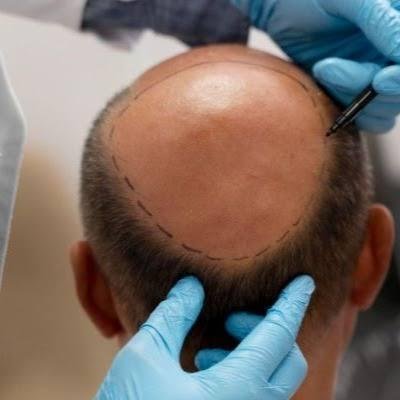
Hair loss affects confidence, appearance and daily comfort for a large number of men and women. For many people, a surgical solution is the most dependable way to restore density. Those considering FUE Hair Transplant in Islamabad often focus on the procedure itself, yet the quality of the result depends heavily on what happens before surgery. The most important step is a careful assessment of the donor area. This article explains how Follicular Unit Extraction works, why donor assessment matters, and how Glamorous approaches the process from the first consultation to the final result.
Understanding FUE Hair Transplantation
Follicular Unit Extraction, commonly called FUE, is a modern hair restoration technique in which individual follicular units are taken from a donor region and placed into areas where hair has thinned or disappeared. The donor region is usually the back and sides of the scalp, because hair in these zones is genetically resistant to the hormone that causes pattern baldness. Once transplanted, these follicles generally keep their natural characteristics and continue to grow in their new location.Unlike the older strip method, FUE does not require removing a linear section of scalp. Each graft is extracted using a very small punch tool, which leaves tiny dot-like marks that heal quickly and are easy to conceal. Patients typically return to light routine activity within a short period, and the absence of a long linear scar means they can wear their hair short if they wish.
Why Donor Area Assessment Comes First?
A hair transplant redistributes existing hair; it does not create new hair. This means the donor area is the limited resource that determines how much coverage can be achieved. Before any procedure is planned, the surgeon must understand exactly what is available and how it can best be used.An incomplete assessment can lead to over-harvesting, uneven density in the donor region, or a plan that promises more than the available supply can deliver. A thorough assessment protects the patient from these outcomes and sets realistic expectations from the start.
What Is Evaluated During Donor Area Assessment?
The assessment looks at several factors that together form a complete picture of the patient’s hair restoration potential.The first is donor density, which refers to the number of follicular units per square centimetre in the safe donor zone. Higher density generally allows more grafts to beharvested without leaving the area looking thin.The second is hair caliber, meaning the thickness of individual strands. Thicker hair offers better visual coverage per graft, so two patients with the same graft count may see different results depending on this characteristic.The third is the number of hairs per follicular unit. Units typically contain between one and four hairs, and a higher average improves the overall volume that can be achieved.The fourth is hair colour and contrast with skin tone. Hair that closely matches the scalp colour tends to appear denser, while high contrast can make thinning more noticeable and requires more careful planning.The fifth is scalp laxity and skin quality. These influence how comfortably grafts can be extracted and how well the donor area heals.Finally, the specialist defines the safe donor zone. Hair outside this region may be vulnerable to future loss, so it is excluded from harvesting to avoid transplanting follicles that may not last.
Evaluating the Recipient Area and Future Hair Loss
Donor assessment cannot be separated from a review of the recipient area. The surgeon studies the pattern and extent of hair loss, the position of the natural hairline, and the age of the patient. Hair loss is often progressive, particularly in younger patients, so a design that looks natural today must also look appropriate years later.For this reason, a responsible plan does not use up the donor supply on the first session without considering what may be needed later. Conservative planning keeps options open and helps the result age naturally alongside the patient’s remaining hair.
Tools Used for an Accurate Assessment
Visual inspection alone is not enough for reliable planning. Digital trichoscopy, which uses magnified imaging of the scalp, allows the specialist to measure density, count follicular units, and examine the health of both the donor and recipient areas. It can also reveal early miniaturisation, where hairs gradually become finer, which helps in identifying the type and stage of hair loss.These measurements give the patient objective information rather than estimates, and they allow the surgical team to calculate a realistic graft count for the desired outcome.
The FUE Procedure at Glamorous
Once the plan is agreed, the procedure is carried out under local anaesthesia, so the patient remains comfortable throughout. The donor area is trimmed, and follicular units are extracted one by one with precision tools. The extracted grafts are carefully sorted according to the number of hairs they contain, which matters because different graft types are used for different zones.Single-hair grafts are generally placed along the front of the hairline to create a soft, natural edge, while multi-hair grafts are positioned behind to provide density and volume. Recipient sites are created with attention to angle, direction and spacing so that the transplanted hair blends with the surrounding hair. The sessions for larger cases may extend across a full day, with breaks to keep the patient comfortable.
Recovery and What to Expect
After the procedure, mild redness, swelling and small scabs in the treated areas are normal. These typically settle within the first one to two weeks. The patient receives clear instructions on washing, sleeping position, sun protection and activities to avoid during the early healing phase.An important point to understand is that transplanted hairs often shed within the first few weeks. This is a normal part of the cycle and does not mean the transplant has failed. New growth usually begins around the third to fourth month, and hair continues to thicken progressively. Final results are generally assessed at around twelve months, though some patients continue to see improvement beyond that point.
Who Is a Suitable Candidate?
FUE is suitable for many adults with stable pattern hair loss who have sufficient donor hair. It can also be used to restore eyebrows, beards and to camouflage certain scars, depending on individual circumstances. Candidates with very limited donor supply, active scalp conditions or unrealistic expectations may need alternative treatments or a different approach, and an honest assessment will make this clear. Medical therapies may also be recommended alongside surgery to help preserve existing hair.
Choosing the Right Clinic
Results in hair transplantation depend on skill, experience and planning as much as on technology. When comparing options for FUE Hair Transplant in Islamabad, patients should look for a clinic that performs a detailed donor assessment, explains the plan transparently, uses hygienic and well-equipped facilities, and provides structured follow-up care. A clinic that is willing to say what is not possible is usually more trustworthy than one that promises unlimited density.
Conclusion
A successful hair transplant starts long before the first graft is extracted. Careful donor area assessment, honest planning and skilled execution are what produce natural, lasting results. By measuring density, evaluating hair quality, defining the safe donor zone and considering future hair loss, Glamorous builds each treatment plan around the individual patient rather than a standard template.If you are considering FUE Hair Transplant in Islamabad, the best first step is a professional consultation. Contact us through our website at https://www.glamorousclinic.com.pk/ to book your assessment and take the first step toward restoring your hair with confidence.

 English
 Arabic
 French
 Spanish
 Portuguese
 Deutsch
 Turkish
 Dutch
 Italiano
 Russian
 Portuguese (Brazil)
 Greek