
24/7 Gym Access Control Systems — A Complete Guide to Round-the-Clock Fitness Access
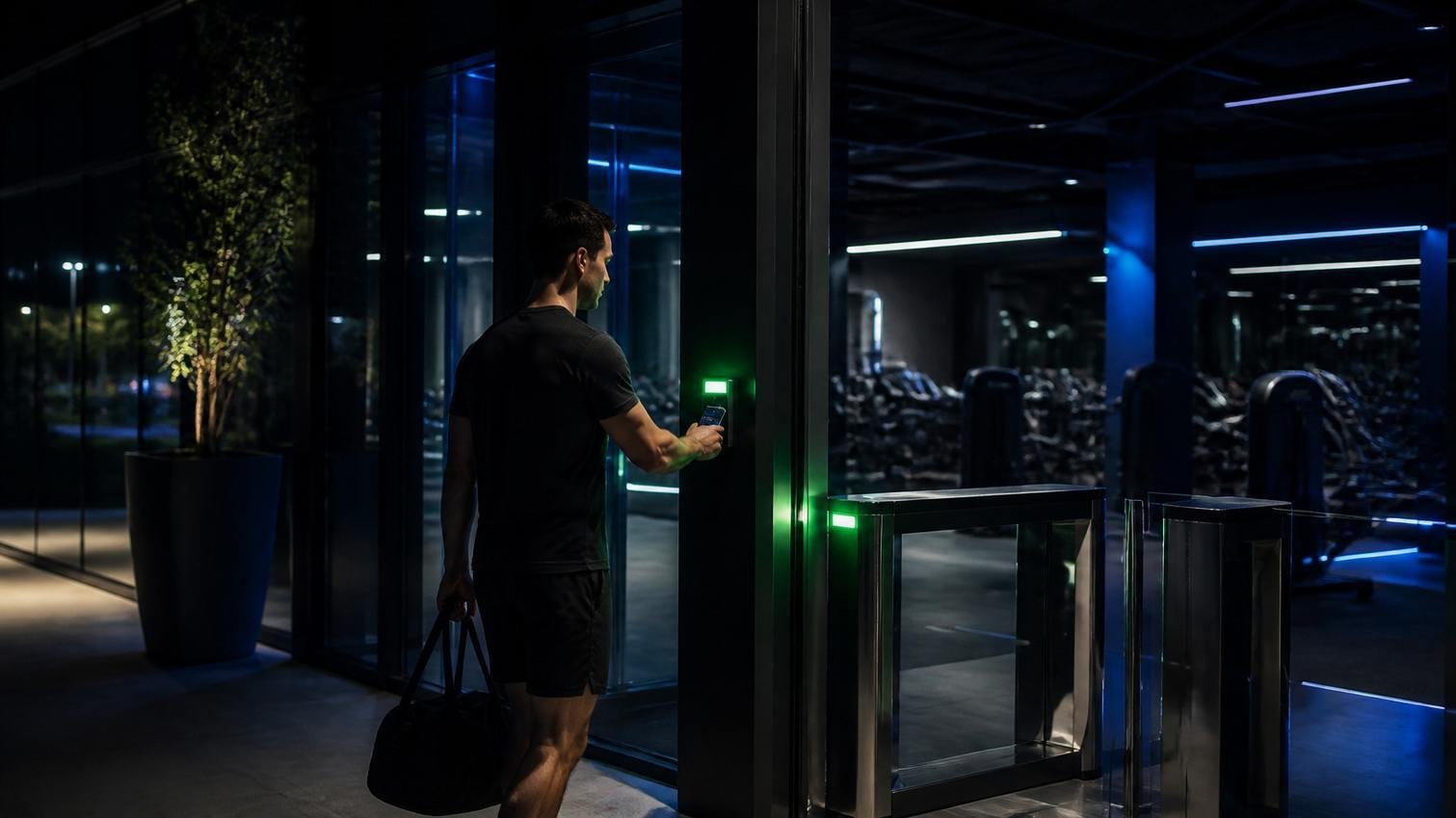
The fitness industry is changing as more people look for convenient ways to exercise around their work schedules, family responsibilities, and personal routines. Traditional gyms often operate during fixed hours, which may not suit members who prefer early-morning workouts or late-night training sessions. As a result, round-the-clock fitness facilities are becoming an attractive option for gym owners who want to serve a wider audience.
However, keeping a gym open 24 hours a day involves more than leaving the doors unlocked. Owners must consider building security, membership verification, access permissions, emergency procedures, and the safety of members using the facility without staff present. This is where 24/7 gym access control systems can play an important role.
These systems help fitness businesses manage who can enter the premises and under what conditions. Depending on the selected technology, members may use key fobs, access cards, mobile credentials, PIN codes, or other authorised entry methods. When properly planned, access control can support flexible gym hours while helping owners maintain oversight of their facilities.
What Are 24/7 Gym Access Control Systems?
24/7 gym access control systems are technologies designed to manage entry into fitness facilities at any time of day or night. They allow gym operators to establish rules for authorised access instead of relying entirely on staff to check every person entering the building.
A typical setup may include electronic door hardware, a credential reader, membership or access-management software, and a system for managing permissions. The exact components depend on the facility's layout, security requirements, and chosen provider.
For example, a gym may allow active members to enter throughout the day while restricting access for expired memberships, suspended accounts, or visitors who have not completed the required registration process. Some facilities may also create different access permissions for specific rooms or areas.
The purpose is not simply to automate the door. It is to establish a more organised process for granting, monitoring, and reviewing access.
Why Are 24-Hour Gyms Becoming Popular?
Flexible schedules have changed how people approach fitness. Some members prefer training before work, while others exercise after evening shifts. Students, freelancers, healthcare workers, and people with rotating schedules may appreciate the ability to visit a gym outside traditional business hours.
Operating around the clock can help a fitness business differentiate itself from competitors. It may also provide greater convenience to existing members who struggle to attend during staffed periods.
Nevertheless, a 24-hour business model creates additional operational responsibilities. Owners must think about security, equipment maintenance, cleaning, incident reporting, and emergency response. A reliable access-control strategy helps address one important part of this wider operational plan.
Key Features to Consider When Choosing an Access Control System
Not every gym needs the same technology. Before investing, owners should compare the following capabilities.
1. Reliable Member Authentication
The system should provide a dependable way to identify authorised users. Key fobs and access cards are common options, while mobile credentials or PIN-based entry may suit some facilities.
Choose a method that members can use easily and that staff can manage without unnecessary complexity.
2. Membership Status Management
Access rules should reflect a member's current eligibility. Gym owners need a clear process for updating permissions when memberships begin, expire, are suspended, or are cancelled.
If access control is connected to membership software, confirm how the systems exchange information and whether updates happen automatically or require manual action.
3. Access Schedules and Permissions
Some gyms provide unrestricted access to eligible members, while others offer different plans. For instance, a premium membership might include 24-hour access, whereas another plan may only permit entry during staffed hours.
A suitable system should support the access rules the business actually needs. Owners should also consider whether separate permissions are required for staff, contractors, trainers, and visitors.
4. Entry Records and Monitoring
Access records can help authorised managers investigate unusual entry patterns or resolve questions about facility use. However, records should be handled responsibly, with clear retention policies and access limited to appropriate personnel.
Entry logs are not a substitute for active security measures, cameras where appropriate, or emergency procedures.
5. Integration with Gym Management Software
Gym management software can help organise memberships, payments, customer records, and daily operations. Where access control integration is supported, it may reduce duplicate data entry and make membership administration more consistent.
Before purchasing, ask vendors to demonstrate the exact integration and explain which actions are automated. Do not assume that every gym-management platform supports every door controller or credential type.
How 24/7 Access Control Works in Practice
The process generally begins when a person purchases a membership and completes the required registration steps. The gym assigns the member an authorised credential and establishes the appropriate access permissions.
When the member arrives, they present their credential to a reader or use another supported authentication method. The system checks the credential against its configured rules and grants or denies entry.
Depending on the setup, an authorised manager may be able to update permissions through a management interface. If a membership expires, the gym can follow its configured procedure to suspend access until the account is renewed or otherwise resolved.
The exact workflow differs by provider. Gym owners should test the complete process, including failed entries, lost credentials, connectivity interruptions, and emergency access, before launching an unattended operating model.
Security Measures for Unstaffed Gym Hours
Technology works best when supported by practical safety procedures. A gym operating around the clock should assess risks specific to its premises and local requirements.
Consider these measures:
-
Install suitable electronic door hardware and ensure doors close and lock correctly.
-
Establish a process for reporting injuries, equipment problems, suspicious activity, and other incidents.
-
Provide clear emergency instructions and accessible contact information.
-
Arrange appropriate lighting in entrances, corridors, changing areas, and parking spaces.
-
Evaluate surveillance in appropriate common areas while respecting privacy and local laws.
-
Create a process for managing lost, stolen, or shared credentials.
-
Review access permissions regularly, particularly for former employees and contractors.
-
Maintain a documented response plan for power failures, network interruptions, and security-system faults.
Access control should never prevent people from escaping during an emergency. Life-safety systems, fire exits, and emergency unlocking arrangements must be designed and installed in accordance with applicable building and fire-safety requirements.
Benefits for Gym Owners and Members
A well-planned access-control setup can create advantages for both sides of the membership relationship.
For members, round-the-clock access offers greater scheduling flexibility and less dependence on staffed reception hours. Clear entry procedures can also make visits more convenient.
For gym owners, access permissions can make membership enforcement more consistent and reduce the need for staff to supervise every routine entry. Digital records may also support investigations and operational reviews.
Other potential benefits include the ability to offer different access packages, improve administrative consistency, and support growth without expanding staffed hours at the same rate. Actual savings depend on installation costs, ongoing service fees, staffing needs, and the facility's operating model.
Common Mistakes to Avoid
One common mistake is selecting a system based only on its upfront price. Door hardware, software subscriptions, installation, maintenance, and integration work can all affect the total cost.
Another mistake is failing to define who is responsible for incidents during unstaffed periods. Before opening 24/7, the business should establish clear procedures for emergencies, injuries, equipment failures, and unauthorised entry.
Gym owners should also avoid assuming that access credentials cannot be shared. A credential system can help manage entry, but policies, monitoring, member education, and suitable technology are still necessary.
Finally, never launch a new system without testing it under realistic conditions. Test valid and expired memberships, lost credentials, access restrictions, and emergency procedures.
How to Select the Right Solution
Start by identifying your facility's needs. A small independent gym may require a simpler arrangement than a multi-location fitness business with separate training rooms and different membership tiers.
Compare providers based on compatibility, ease of administration, technical support, security features, reporting, and total cost of ownership. Ask for a demonstration using realistic membership scenarios rather than relying solely on promotional descriptions.
Gym owners exploring broader operational tools can also evaluate platforms such as GymRoute at https://gymroute.com/. Confirm its current capabilities, access-control integrations, and compatibility with your chosen hardware directly with the provider before making a purchasing decision.
Frequently Asked Questions
1. What are 24/7 gym access control systems used for?
They manage entry to fitness facilities around the clock by applying rules that determine which members, employees, or other authorised individuals can enter.
2. Can members enter a gym without reception staff?
Yes, a suitable access-control setup can permit authorised members to enter without a receptionist being present. However, the gym still needs appropriate safety, maintenance, emergency, and incident-response arrangements.
3. Which credentials can be used for gym access?
Depending on the equipment, systems may support key fobs, access cards, mobile credentials, PIN codes, or other authentication methods. Compatibility varies by provider.
4. Can access control work with membership software?
Some solutions integrate with gym-management platforms, allowing membership information and entry permissions to work together. Owners should confirm the exact integration, supported functions, and update process.
5. Is access control enough to keep a 24-hour gym safe?
No. It is one part of a broader safety strategy that should also address emergency exits, lighting, maintenance, incident reporting, communication, and compliance with applicable requirements.
6. How much do 24/7 gym access control systems cost?
Costs vary according to the number of doors, hardware, credential technology, installation requirements, software fees, integrations, and ongoing support. Request a detailed quote based on your actual facility.
7. What should gym owners do if a member loses a key fob?
They should have a documented process for reporting the loss, disabling the old credential where supported, verifying the member's identity, and issuing a replacement.
Final Thoughts
24/7 gym access control systems can help fitness businesses provide flexible entry while maintaining clearer control over membership permissions. The best solution combines suitable hardware, dependable authentication, practical management procedures, and a safety plan designed for both staffed and unstaffed hours.
Gym owners should evaluate their facility's risks, compare the complete cost of ownership, and verify compatibility before choosing a provider. With thoughtful implementation and regular reviews, round-the-clock access can become a more manageable part of a modern fitness business.

 English
 French
 Spanish
 Portuguese
 Deutsch
 Turkish
 Dutch
 Italiano
 Russian
 Romaian
 Portuguese (Brazil)
 Greek