
HF Handles and Cautery Pencils: What Belgian Buyers Should Check Before Ordering
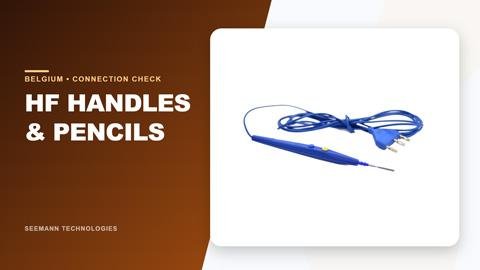
HF handles and cautery pencils can appear to be straightforward electrosurgical accessories, but professional purchasing requires more than matching the general product shape. The electrode interface, control format, cable, equipment-side connector and intended HF unit all contribute to the final product specification.
For Belgian medical distributors and hospital procurement teams, establishing these details before requesting samples or quotations can reduce compatibility uncertainty and make repeat purchasing easier to control.
Start With the Complete HF Connection
An HF handle does not operate in isolation. Depending on the product configuration, the complete purchasing requirement may involve the active electrode, handle or pencil, cable, connector and HF unit.
A useful procurement sequence is:
-
identify the required electrode or working end;
-
confirm the shaft or handle interface;
-
define the handle or pencil configuration;
-
identify the cable arrangement;
-
confirm the equipment-side connector; and
-
provide the HF equipment manufacturer and model.
This approach gives the supplier a defined system to review rather than a general request for a “compatible cautery pencil”.
Understand the Terminology Before Comparing Products
Different manufacturers and distributors may use terms such as HF handle, electrosurgical pencil, diathermy handpiece or cautery pencil for related product families.
The commercial terminology is useful, but it should never replace a technical product description.
Before comparing alternatives, buyers should establish what the proposed product actually includes. For example:
-
Is the electrode fixed or detachable?
-
Is a cable included?
-
What control arrangement applies?
-
Which electrode shaft or interface is accepted?
-
Which equipment-side connector is supplied?
-
Is the product single use or reusable?
These details determine whether two apparently similar products are genuinely comparable.
Procurement insight: A useful HF handle quotation should identify the complete interface from the active electrode to the HF equipment. Product equivalence should not be assumed from the words “cautery pencil” or from visual appearance alone.
Hand-Control and Foot-Control Requirements Should Be Defined Clearly
Electrosurgical handpieces may be configured around different control systems. Where hand-control or foot-control operation forms part of the purchasing requirement, that information should be stated explicitly.
Hand-control requirements
In a hand-controlled arrangement, activation controls form part of the handpiece configuration. Buyers still need to identify the required electrode interface, cable and equipment-side connection.
Foot-control requirements
With a foot-controlled arrangement, the handpiece is used within an HF setup in which activation is associated with the relevant equipment and footswitch configuration.
The terms should therefore be treated as specifications, not simply as catalogue categories. A Belgian distributor carrying both formats should ensure that sales and purchasing records distinguish them clearly.
Fixed and Detachable Electrode Formats
Another important distinction is whether the active electrode forms a fixed part of the supplied product or can be removed from the handle.
Where detachable electrodes are involved, the electrode-to-handle interface becomes an additional purchasing consideration.
Useful information may include:
-
electrode shaft diameter;
-
working-end configuration;
-
shaft length where relevant;
-
insulation;
-
handle reference;
-
cable arrangement; and
-
single-use or reusable status.
Buyers should also clarify what is meant when a supplier describes a product as a “detachable cautery handpiece”. The detachable component may differ between product designs.
Active Electrodes Need Their Own Product References
A cautery pencil may accept different active electrodes, and each electrode should retain its own specification.
Working-end descriptions encountered in professional sourcing can include needle, knife or blade, ball, loop, spatula and other specialised configurations.
However, the working end alone does not identify the complete electrode.
Professional buyers may also need to record:
-
shaft diameter;
-
working or overall length;
-
straight or angled configuration;
-
insulation;
-
handpiece interface;
-
single-use or reusable format; and
-
manufacturer reference.
This is particularly important when a distributor supplies more than one hospital account and needs to avoid mixing visually similar electrodes.
Cable and Connector Information Should Stay With the Handle Reference
An HF handle with the correct electrode interface can still be unsuitable if its equipment-side connector does not correspond with the intended HF unit.
When requesting a replacement or alternative product, buyers should provide:
-
current handle reference;
-
HF equipment manufacturer;
-
HF equipment model;
-
existing connector information;
-
required electrode interface; and
-
photographs or controlled technical information where necessary.
This gives the manufacturer a better basis for reviewing the requirement than a photograph of the connector alone.
Single-Use and Reusable Formats Create Different Purchasing Models
A hospital may use single-use products in one electrosurgical category and reusable products in another.
The correct format depends on the product and the healthcare organisation’s established processes.
Single-use products
Buyers may need to consider sterile presentation where applicable, pack quantities, product identification, stated shelf life and recurring consumption.
Reusable products
Reusable products introduce lifecycle considerations, including the manufacturer’s applicable handling and reprocessing information and the healthcare organisation’s own established processes.
Neither format should automatically be presented as preferable in every environment.
Samples Should Confirm the Complete Configuration
A sample evaluation is most useful when the product can be traced directly to the item that will later be quoted and supplied.
Procurement teams may check:
-
handle or pencil reference;
-
control configuration;
-
electrode interface;
-
included electrode where applicable;
-
cable;
-
equipment-side connector;
-
packaging; and
-
supporting technical information.
If the production order will differ from the evaluated sample, those differences should be confirmed before routine purchasing begins.
Build a Distributor Range Around Known Equipment Requirements
Belgian distributors do not necessarily need to stock every handle, electrode and connector combination.
A more controlled range can be divided into:
-
core references used by established hospital accounts;
-
equipment-specific handle and connector combinations;
-
common active electrode references;
-
single-use products with predictable recurring demand;
-
reusable products supporting existing customers; and
-
specialist configurations supplied after technical confirmation.
This structure reduces catalogue confusion and allows sales teams to respond to compatibility questions with more precise information.
Review Connected Electrosurgical Categories Together
A hospital requesting an HF handle may also need active electrodes, bipolar forceps, cables or other HF products. Reviewing these connected categories within one supplier relationship can make technical communication more efficient.
Seemann Technologies presents HF handles, cables and electrosurgical instruments within a wider product structure that also includes single-use HF instruments, bipolar forceps, monopolar electrodes and minimally invasive products.
Connected sourcing does not remove the need for compatibility checks. Each handle, electrode and cable should still be confirmed for the intended system.
Documentation Should Match the Exact Product
Professional buyers may require product specifications, instructions for use, packaging details, labelling information, applicable conformity documentation and compatibility information.
A general supplier document should not be treated as a substitute for information associated with the exact handle, electrode or accessory under evaluation.
Belgian distributors should also complete the market and economic-operator checks applicable to their own role before placing products into commercial distribution.
Information to Include in an HF Handle or Cautery Pencil RFQ
-
HF handle or cautery pencil requirement;
-
hand-control or foot-control requirement where applicable;
-
fixed or detachable electrode format;
-
required electrode working end;
-
electrode shaft/interface information;
-
single-use or reusable preference;
-
cable requirement;
-
equipment-side connector;
-
HF unit manufacturer and model;
-
existing product reference;
-
sample quantity;
-
commercial quantity;
-
packaging requirements;
-
Belgian delivery destination; and
-
documentation required for evaluation.
Better HF Handle Purchasing Starts With the Interface
HF handles and cautery pencils are easiest to source when the buyer defines the complete connection rather than selecting the handpiece independently. Electrode fit, control method, cable, connector and HF equipment should remain linked throughout supplier comparison and sample evaluation.
For Belgian distributors and hospital procurement teams, providing those details early creates a stronger basis for receiving technically relevant product information and accurate commercial quotations.

 Arabic
 French
 Spanish
 Portuguese
 Deutsch
 Turkish
 Dutch
Dutch
 Italiano
 Russian
 Romaian
 Portuguese (Brazil)
 Greek
Greek