
Miniature Circuit Breaker and MCCB Breakers: A Complete Guide
Introduction
Electrical protection is an essential part of any safe power distribution system. A miniature circuit breaker helps protect smaller electrical circuits from problems such as overloads and short circuits, while MCCB breakers are designed for applications requiring higher current capacity and more advanced protection.
Although both devices perform protective functions, they are designed for different applications. Understanding their features, ratings, and intended uses can help homeowners, contractors, and businesses make more informed electrical equipment decisions.
What Is a Miniature Circuit Breaker?
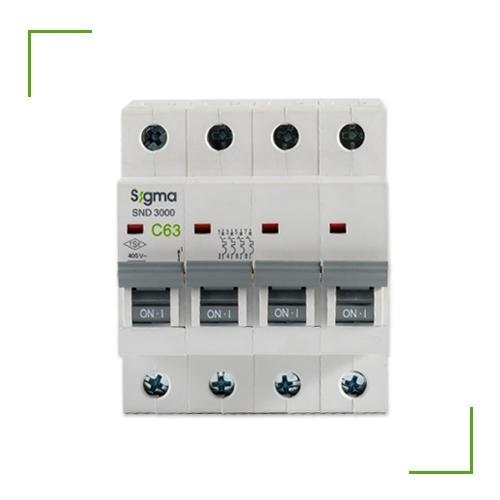
A miniature circuit breaker, commonly called an MCB, is an automatic protective device designed to interrupt electrical current when an overload or short circuit occurs. MCBs are commonly used in residential properties, shops, offices, and smaller electrical distribution systems.
Instead of replacing a fuse after a fault, an MCB can generally be reset once the underlying problem has been addressed. Depending on the product, MCBs can be available with different current ratings, pole configurations, breaking capacities, and tripping characteristics.
How Does an MCB Work?
An MCB uses protective mechanisms to detect excessive current. During an overload, its thermal mechanism responds to the increased current, while its magnetic mechanism can respond rapidly to short-circuit conditions.
Once the breaker detects a qualifying fault, it disconnects the affected circuit. This helps protect electrical wiring and connected equipment from excessive current.
What Are MCCB Breakers?
MCCB stands for Molded Case Circuit Breaker. These breakers are generally designed for electrical systems with higher current requirements and are commonly used in commercial buildings, industrial facilities, heavy machinery systems, generators, and larger distribution panels.
Jawad Electric's MCCB range includes models with current ratings from 25A to 1600A, demonstrating the broader capacity available within MCCB product ranges.
Key Features of MCCBs
Depending on the specific model, MCCBs can provide:
- Higher current capacity
- Overload protection
- Short-circuit protection
- Adjustable protection settings on applicable models
- Higher breaking capacity
- Compatibility with larger electrical distribution systems
Some MCCB configurations can also support earth-leakage protection when combined with appropriate external components.
MCB vs. MCCB: Understanding the Difference
The primary difference between an MCB and an MCCB is their intended application and capacity. MCBs are typically used for smaller circuits, while MCCBs are designed for higher-current systems and larger electrical installations.
MCB Applications
A miniature circuit breaker may be suitable for:
- Residential distribution boards
- Lighting circuits
- Small commercial spaces
- Individual appliance circuits
- Smaller electrical systems
MCCB Applications
MCCB breakers are more commonly associated with:
- Industrial facilities
- Large commercial buildings
- Heavy machinery
- Generators
- Large electrical panels
- Higher-current distribution systems
The correct selection should depend on the electrical design rather than simply choosing the breaker with the highest available rating.
How to Choose the Right Circuit Breaker
Choosing an electrical breaker requires more than checking its current rating. The system voltage, expected load, available fault current, cable characteristics, number of poles, and coordination with other protective devices can all influence the appropriate selection.
Before purchasing, consider:
- Determine the expected electrical load.
- Check the required voltage and phase configuration.
- Select an appropriate current rating.
- Review the required breaking capacity.
- Consider the number of poles needed.
- Check the manufacturer's technical specifications.
- Ensure installation is carried out according to the electrical design.
For larger commercial or industrial systems, professional electrical guidance is particularly important.
Why Quality Matters in Circuit Protection
Circuit breakers are safety components, so product quality and correct specifications matter. Jawad Electric states that its MCB products include multiple breaking-capacity and current-rating options, while its MCCB products are manufactured to IEC/EN 60947-2 and CE standards.
Buyers should therefore review the manufacturer's documentation and ensure that the selected breaker matches the requirements of the electrical installation.
Why Consider Jawad Electric?
Jawad Electric offers miniature circuit breaker and MCCB solutions as part of a broader range of low-voltage electrical protection and switchgear products. Its product range includes MCBs, MCCBs, RCCBs, ELCBs, contactors, protection relays, and other electrical components.
For projects involving electrical distribution, comparing product specifications and selecting breakers according to the system's actual requirements can help support reliable and appropriately designed circuit protection.
Frequently Asked Questions
1. What is a miniature circuit breaker?
A miniature circuit breaker is an automatic protective device that interrupts a circuit during qualifying overload or short-circuit conditions. It is commonly used in residential and smaller commercial electrical systems.
2. What are MCCB breakers used for?
MCCB breakers are generally used for higher-current electrical applications, including industrial facilities, commercial buildings, heavy equipment, and larger distribution systems.
3. What is the difference between MCB and MCCB?
MCBs are generally intended for smaller electrical circuits, while MCCBs are designed for higher-current applications and can offer additional configuration and protection capabilities depending on the model.
4. How do I choose the right circuit breaker?
Consider the system's load, voltage, phase configuration, current rating, breaking capacity, cable requirements, and coordination with other protective devices. For complex installations, consult a qualified electrical professional.
Conclusion
A miniature circuit breaker and MCCB breakers both play important roles in electrical protection, but they serve different types of installations. MCBs are commonly suited to smaller circuits, while MCCBs provide higher-capacity protection for larger commercial and industrial applications.
When selecting a breaker, focus on the electrical system's actual requirements rather than choosing based solely on size or price. Jawad Electric can be considered when exploring circuit breakers and low-voltage switchgear solutions for residential, commercial, and industrial applications.

 Arabic
 French
 Spanish
 Portuguese
 Deutsch
 Turkish
 Dutch
Dutch
 Italiano
 Russian
 Romaian
 Portuguese (Brazil)
 Greek
Greek