
Roof Waterproofing Services for Leakage Prevention
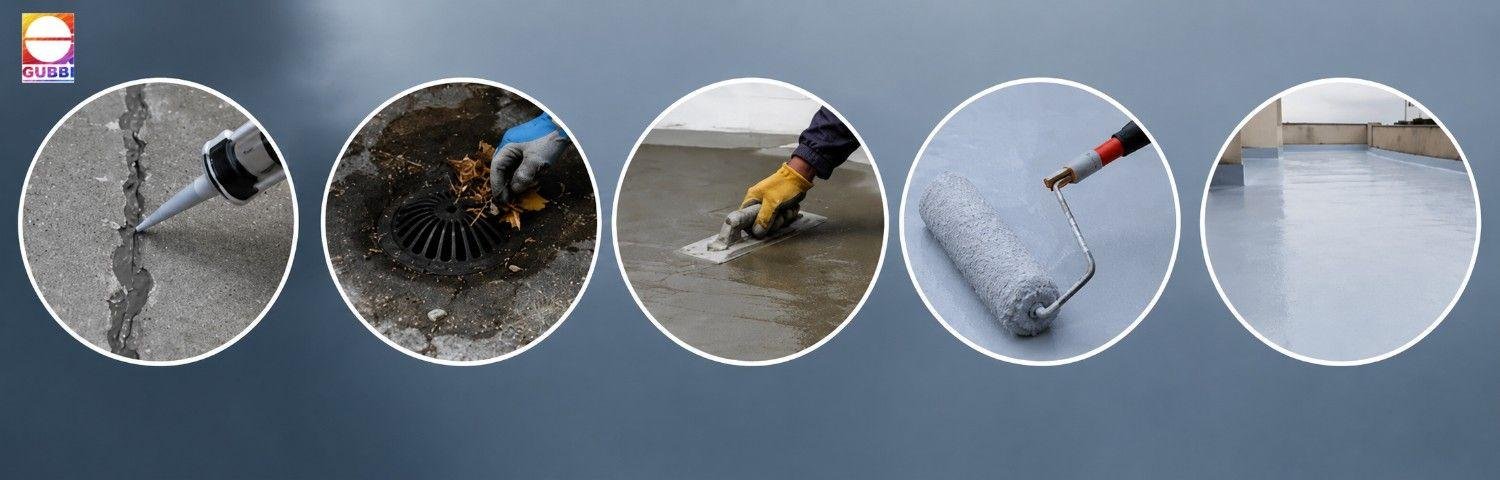
Roof and terrace areas remain exposed to rain, sunlight, temperature changes, dust, and maintenance activity. When water finds cracks, joints, damaged coatings, or poorly drained areas, it can gradually move into the building and create dampness below. Roof waterproofing services are therefore not simply about applying a coating over a surface. They involve identifying moisture entry points, preparing the substrate, treating vulnerable areas, and selecting a waterproofing system suitable for each building.
Why Roof Waterproofing Is Important
Terrace waterproofing services become especially important for industrial buildings, commercial facilities, offices, warehouses, institutions, and other structures where roof leakage can interrupt regular operations. Water seepage may affect ceilings, electrical routes, stored materials, equipment areas, finishes, and concrete surfaces. Addressing the problem early can prevent repeated patchwork and help protect the roof system. The right treatment should consider the terrace condition, drainage pattern, surface usage, and expected exposure.
Understanding Terrace Leakage Problems
Many property owners initially search for terrace waterproofing contractors only after noticing visible leakage inside the building. However, the visible damp patch is not always directly below the actual entry point. Water can travel through cracks, construction joints, slab interfaces, and concealed paths before appearing elsewhere. A proper waterproofing assessment therefore looks beyond the damaged interior area and examines the roof surface, drainage points, parapets, joints, penetrations, and existing treatment.
Common Signs of Roof Leakage
Common signs of roof waterproofing problems include damp patches, peeling paint, recurring ceiling stains, water dripping during rainfall, algae growth, cracked surface layers, blistered coatings, and water remaining on the terrace after rain. These symptoms should not automatically be treated as isolated maintenance issues. Repainting the affected ceiling may improve appearance temporarily, but it does not remove the source of water. The roof needs inspection before selecting a repair method.
The Role of Proper Roof Drainage
One major reason terrace leakage develops is poor water drainage. A roof surface needs a suitable slope so rainwater can move toward designated outlets rather than remain in depressions. Blocked outlets, damaged rainwater pipes, settlement, or uneven surface layers can create ponding. Over time, standing water increases exposure to the waterproofing layer and nearby joints. Correcting drainage conditions should therefore form part of the waterproofing plan where required.
Treating Cracks Before Waterproofing
Cracks are another important concern during roof waterproofing work. Some cracks may be superficial, while others can indicate movement, shrinkage, thermal effects, or deterioration within the concrete system. Treating every crack in the same way can lead to premature failure. The width, depth, location, movement potential, and surrounding surface condition should be considered before repair. Flexible treatment may be appropriate in some locations, while other defects need structural attention.
Protecting Vulnerable Terrace Details
Parapet walls, pipe penetrations, rainwater outlets, equipment bases, and slab-to-wall junctions often require careful detailing because they create changes in geometry and movement. A waterproofing layer that performs well across an open slab can still fail at a poorly treated junction. Professional roof waterproofing services therefore focus on continuity rather than covering only the main terrace area. Every transition should be checked so water does not find an unprotected route.
Selecting the Right Waterproofing System
Different buildings require different waterproofing approaches. A lightly used terrace may need a coating-based system, while a heavily accessed industrial roof may require a more robust membrane and protective arrangement. Existing tiles, screed, concrete condition, movement, drainage, exposure, and maintenance requirements also influence the selection. The objective is not to choose the most expensive product, but to choose a compatible system that addresses the actual leakage mechanism.
Liquid Waterproofing Solutions
Liquid-applied waterproofing systems can provide continuous coverage across suitable roof surfaces, including areas with multiple details and difficult junctions. Depending on the specification, these systems may be based on polyurethane, acrylic, polymer-modified, or other compatible technologies. Their performance depends greatly on substrate preparation, application thickness, curing, detailing, and weather conditions. A coating should never be considered successful simply because the terrace looks uniformly painted after application.
Membrane Waterproofing for Terraces
Membrane waterproofing is another option used for roof and terrace applications where a continuous protective layer is required. Sheet-applied systems can be selected according to conditions, while joints, overlaps, terminations, outlets, and penetrations need careful execution. The membrane must also be protected when the terrace is expected to receive regular traffic or a finishing layer. System selection should follow the roof design and site requirements rather than a standard formula.
Waterproofing Older Terraces
Older terraces often require more investigation because several layers may have accumulated over the years. Previous coatings, screeds, tiles, repairs, and waterproofing treatments can conceal cracks or trapped moisture. Simply adding another layer may not solve the problem if the underlying surface is unstable or saturated. For such roofs, terrace waterproofing contractors should understand the existing build-up and determine whether repair, partial removal, overlay, or complete replacement is more suitable.
Waterproofing for Industrial and Commercial Buildings
For industrial and commercial properties, roof leakage can become an operational concern rather than a minor cosmetic issue. Water entering production, storage, service, or equipment areas may create additional maintenance requirements and disrupt planned activities. Waterproofing work should therefore be coordinated with access restrictions, machinery locations, safety requirements, and operating schedules. A properly planned project can reduce unnecessary disruption while addressing the roof condition systematically and maintaining site safety.
Importance of Surface Preparation
Before waterproofing begins, surface preparation is one of the most important stages. Dust, loose particles, deteriorated coatings, grease, algae, weak concrete, and other contaminants can reduce adhesion and affect system performance. Damaged areas may need to be repaired, cracks treated, and unsuitable layers removed. Drain outlets and junctions should also be cleaned and prepared. The final waterproofing system can only perform as intended when the underlying surface is properly prepared.
Managing Thermal and Structural Movement
Waterproofing should also consider movement caused by temperature variation and structural conditions. Roof surfaces expand and contract as they heat and cool, while joints and interfaces may experience repeated movement. A rigid treatment in a movement-prone location can crack and reopen the pathway for water. Flexible detailing, suitable reinforcement, sealants, or movement-compatible systems may therefore be required at selected locations. The correct solution depends on the condition observed during inspection.
Maintenance After Waterproofing
Regular maintenance can extend the usefulness of a waterproofed terrace. Rainwater outlets should remain clear, surface damage should be addressed quickly, and activities such as drilling or fixing equipment should not compromise the waterproofing layer. Any new penetrations should be properly sealed and detailed. Periodic inspection is particularly useful before and after the monsoon because small defects can often be identified before they develop into extensive leakage or deterioration within the building.
How to Choose Terrace Waterproofing Contractors
Choosing terrace waterproofing contractors should involve more than comparing the lowest quotation. Property owners and facility teams should review the proposed system, scope of surface preparation, crack treatment, junction detailing, testing procedure, completion period, and maintenance requirements. It is also useful to understand whether the contractor has experience with similar roof conditions and building types. A clear technical proposal makes it easier to compare alternatives based on actual work.
Understanding Roof Waterproofing Cost
The cost of roof waterproofing services depends on several factors, including terrace area, existing surface condition, extent of repair, waterproofing system, access, drainage correction, protection requirements, and finishing layers. A small visible leak does not necessarily mean the required work is small. Conversely, an extensive terrace may need limited treatment if the existing surface is sound. A site assessment provides a more meaningful basis for planning the scope and budget.
Testing the Waterproofed Terrace
Waterproofing work should ideally include appropriate testing before the treated area is handed over. Testing helps identify whether water is still entering through untreated or weak locations and gives the project team an opportunity to correct defects. The testing method and duration should follow the project specification and selected system. Documentation of completed areas, repaired defects, and testing results can also help facility teams maintain a record for future inspections.
Waterproofing as a Complete System
A successful terrace waterproofing project is ultimately about controlling water movement, not simply hiding signs of leakage. The visible coating is only one part of the system. Drainage, surface condition, crack treatment, junctions, penetrations, membrane or coating selection, protection, and maintenance all contribute to performance. When these elements are considered together, the building owner gets a more practical solution that addresses the roof as a complete waterproofing system.
Choosing a Suitable Waterproofing Contractor
For industrial, commercial, and infrastructure facilities, selecting a technically capable contractor can make the waterproofing process easier to manage. Gubbi Civil Engineers Limited can be considered when the requirement involves assessing the roof condition, understanding the source of leakage, and planning a suitable waterproofing approach for the site. The recommendation should always be based on project requirements, existing conditions, execution scope, and the level of technical coordination needed.
Plan Waterproofing Before Leakage Gets Worse
Roof waterproofing is most effective when it is planned before leakage becomes a repeated maintenance problem. Early inspection can reveal blocked outlets, deteriorated coatings, open joints, cracks, damaged surface layers, and other warning signs. Addressing these conditions before the monsoon or before major deterioration develops can help reduce emergency repair requirements. For facility managers, this approach also supports planned maintenance and better control over building upkeep and operational interruptions.
Making the Right Waterproofing Decision
When evaluating waterproofing solutions, the right question is not simply which product stops water today. The better question is whether the system matches the roof, the building use, the exposure, the drainage arrangement, and future maintenance needs. A well-designed treatment can provide a clear path from diagnosis to preparation, application, testing, and upkeep. This system-based approach is especially valuable for large industrial and commercial properties where repeated failure is costly.
Roof Waterproofing Services and terrace waterproofing services should be treated as preventive building protection as well as leakage repair. The right terrace waterproofing contractors will investigate the source, prepare the surface, treat vulnerable details, select a suitable system, and verify the completed work. A practical monsoon-ready terrace protection approach can help businesses protect roof areas, reduce recurring seepage, and maintain building performance through changing weather conditions.

 Arabic
 French
 Spanish
 Portuguese
 Deutsch
 Turkish
 Dutch
 Italiano
 Russian
 Romaian
 Portuguese (Brazil)
 Greek