
When Science Meets Religion: How Speculative Fiction Explores the Unknown
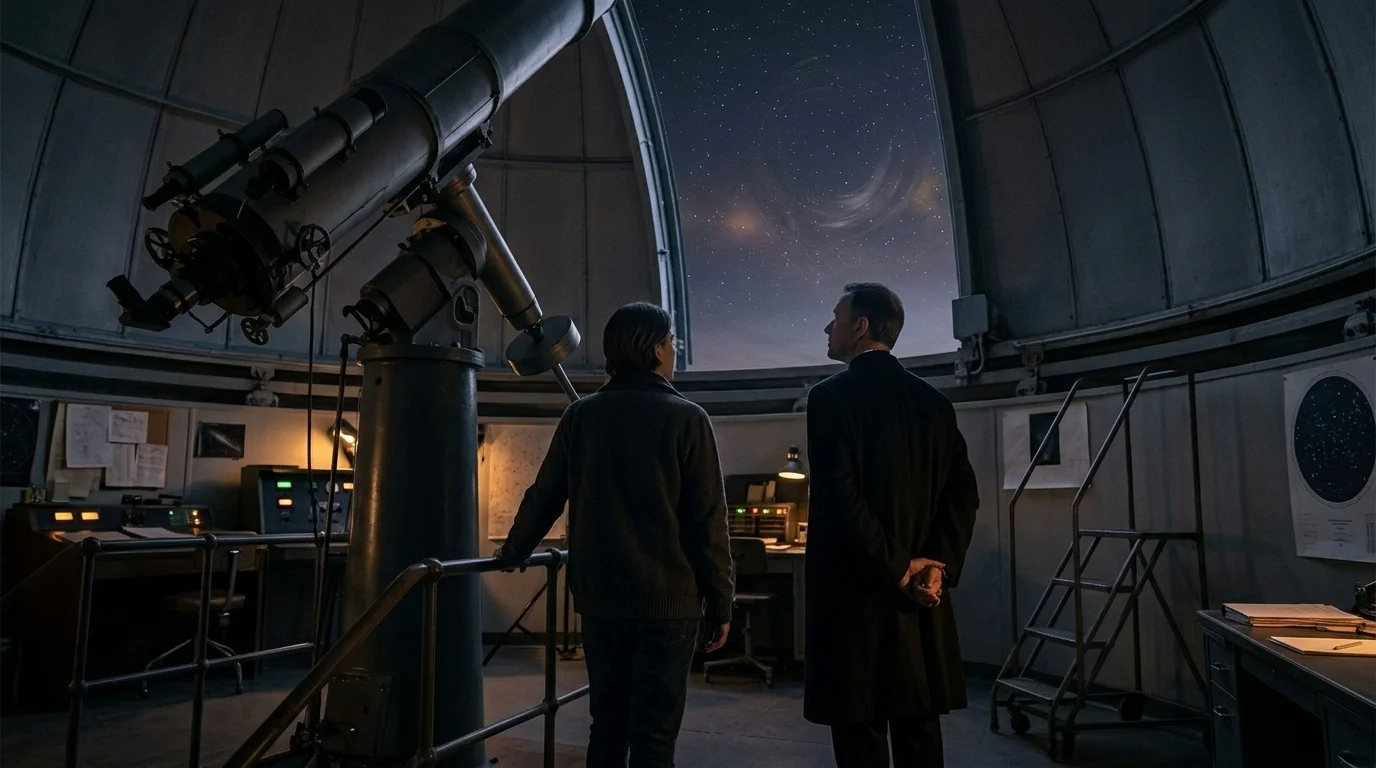
Science and religion in fiction can place familiar questions under unfamiliar pressure. What can people establish through observation? How do they respond when an event resists explanation? What happens when the survival of the world depends on a decision that technical knowledge alone cannot settle?
In The Divine Aleph: Becky’s Story, Thomas A. Curtis explores those questions through Becky Hughes, a Louisiana girl whose extraordinary abilities draw the attention of religious investigators and, eventually, people confronting a cosmic threat. Her existence challenges the boundaries characters have drawn between physical reality and divine involvement.
Curtis’s approach combines scientific speculation with theological and philosophical conflict. The result is a fictional setting in which understanding a danger and deciding what to do about it are closely connected problems.
Different Ways of Asking Questions
Scientific investigation and religious belief enter the novel through people with different responsibilities. Researchers must examine alarming observations. Church officials must consider reports with possible theological implications. Becky’s family must live with a person whom other people increasingly struggle to understand.
These perspectives do not produce a simple division between people who reason and people who believe. Characters must assess evidence while dealing with fear, loyalty, institutional expectations, and their own investment in being right.
The novel’s interest lies partly in how those pressures affect judgment. An observation may be unsettling because it is unfamiliar, but also because accepting it would require changes in a person’s professional or spiritual life.
Speculative fiction gives Curtis room to make those conflicts concrete. Instead of keeping science and faith within a theoretical discussion, he creates events that demand a response from everyone involved.
Becky Hughes and the Limits of Familiar Explanations
Becky’s abilities emerge within ordinary settings. Her family encounters unusual communication, knowledge, and behavior while continuing to care for her as a child. Experiences that would astonish an outsider become part of the household’s daily life.
This difference in perspective matters. Familiarity affects how people respond to what they observe. Caleb’s understanding of Becky is shaped by years of being her brother. An investigator meeting her for the first time has different reasons for caution.
Neither position makes the questions disappear. Instead, Curtis shows how difficult it can be to communicate an experience to someone who does not share its context. The family’s acceptance cannot substitute for an outsider’s investigation, and outside scrutiny cannot fully explain what Becky means to her family.
Her presence creates a continuing problem of interpretation. People must decide what they have seen, what it suggests, and how much confidence they can place in their conclusions.
Harper McCloud and Scientific Skepticism
Harper McCloud is approached to investigate reports involving Becky on behalf of the Catholic Church. He considers himself a debunker and initially expects another questionable claim rather than an encounter that will overturn his understanding of reality.
His skepticism gives the story a method of testing its extraordinary premise. He asks questions because accepting a supernatural explanation would require him to reconsider much of his professional experience.
Dr. Barbara Rushton brings another perspective. Her work in philosophy and ethics equips her to examine moral reasoning, but her involvement exposes the difference between discussing a metaphysical possibility and experiencing something she cannot comfortably explain.
Together, the investigators help Curtis explore the limits of certainty. Their reactions are personal as well as intellectual. Whatever they conclude will affect their careers, relationships, and sense of their place in the world.
The novel places their investigation within a fictional reality where extraordinary events occur. That narrative choice allows it to examine the consequences of discovery without making the story a claim about real-world proof of supernatural activity.
The Oort Cloud and a Cosmic Threat
The scientific storyline expands around an anomaly associated with the Oort Cloud. Within the novel, researchers identify enormous antimatter objects on a threatening course toward the Sun.
The scenario introduces a danger that cannot remain a private concern. Its possible consequences involve humanity as a whole, drawing scientific organizations and public authorities into the unfolding events.
Curtis uses scientific concepts as part of the fictional threat. In his introduction, he explicitly acknowledges that his attempt to connect physical and metaphysical ideas may involve errors or imaginative departures. The astronomical events should therefore be understood as elements of the narrative.
What matters to the story is the pressure created by the observations. The researchers need to understand what is approaching, how much time remains, and whether any available response can prevent catastrophe.
The scale also changes the importance of Becky’s abilities. What appeared to be a local mystery becomes inseparable from a crisis that recognized institutions cannot easily resolve.
Explanation Does Not Settle Responsibility
A threat can be described without its moral questions being answered. Even if the characters understand the approaching danger, they must still decide what risks are acceptable and who should bear them.
This is where science and religion in fiction become particularly closely connected in The Divine Aleph. Scientific information establishes urgency. Theological and ethical questions shape the possible response.
Becky’s involvement brings extraordinary power into the discussion, but power does not produce a simple solution. Her decisions exist within a larger conflict involving creation, judgment, and the possibility of a reset.
The question becomes more difficult than whether humanity can survive. Characters must consider what survival means, what makes humanity worth preserving, and what a rescue might demand from those involved.
Why Religious Institutions Seek Evidence
The Catholic Church’s investigation shows that religious authority does not eliminate uncertainty. Reports about Becky require examination precisely because the implications of accepting them are so substantial.
Clergy must consider whether they are encountering deception, misunderstanding, or something that challenges established expectations. Bringing in Harper allows an outside perspective to enter that process.
Yet his involvement creates another problem. Evidence that changes the investigator may be difficult to communicate to those who have not shared the experience. An account can sound implausible even when its speaker is certain of what occurred.
Curtis uses this gap to examine the difficulty of institutional judgment. The Church must respond to testimony while recognizing that its decisions could affect believers, witnesses, and its own understanding of spiritual authority.
The investigation consequently develops through conversations, observation, caution, and disagreement rather than an immediate declaration that resolves every question.
Human Values Within a Vast Universe
The novel’s cosmic scale would mean less without its attention to ordinary relationships. Humanity is represented through people who grieve, joke, misunderstand one another, and sometimes act with courage or generosity.
Becky’s family gives the survival question a personal shape. Edwin and Caleb are concerned with someone they love. Their experience reveals the difficulty of discussing humanity’s future as though individual lives and attachments were interchangeable.
Friendships across religious backgrounds add another dimension. Becky’s relationship with Salah brings questions about belief into a setting where respect is shown through conversation and practical understanding.
These scenes connect the abstract idea of humanity to recognizable conduct. The world contains cruelty and selfishness, but it also contains affection, loyalty, humor, and people willing to help one another.
Discovery Changes the People Who Make It
The Divine Aleph also asks whether knowledge can be acquired without consequence. Harper and Barbara’s experiences alter their assumptions and bring responsibilities they did not expect when the investigation began.
Their situation complicates the idea that solving a mystery simply restores order. Sometimes an answer makes an ordinary life harder to resume. Knowing more can mean having fewer comfortable explanations available.
This consequence gives the novel’s treatment of science and faith an emotional dimension. The characters are involved in what they learn. They cannot always retreat into the position of detached observers.
Exploring the Unknown Through Fiction
Thomas A. Curtis uses speculative fiction to place scientific observation, religious interpretation, and moral responsibility within the same crisis. Each supplies questions that the others cannot simply remove.
The Divine Aleph invites readers to consider how they would respond if a familiar world became difficult to explain. Would they investigate, deny, defer to authority, or change their minds? And after reaching a conclusion, what would they be prepared to do?
Its exploration of the unknown returns to a practical concern: how people should act when certainty is incomplete and the consequences are immense. In that setting, science and religion become part of a story about judgment, responsibility, and the human lives behind the argument.

 Arabic
 French
 Spanish
 Portuguese
 Deutsch
 Turkish
 Dutch
 Italiano
 Russian
 Romaian
 Portuguese (Brazil)
 Greek