
A Beginner’s Guide to Working With a Hyper Casual Game Development Company
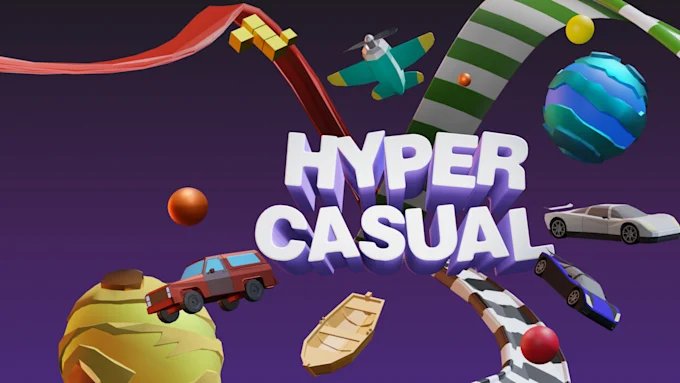
The mobile gaming industry has become one of the most accessible and competitive areas of digital entertainment. With millions of people playing games on smartphones every day, businesses and entrepreneurs are increasingly exploring opportunities to create their own mobile titles. However, developing a successful game requires more than a creative idea. It involves design, programming, testing, monetization, user experience, marketing, and ongoing optimization.
For beginners, handling all these areas independently can be overwhelming. This is where working with a Hyper Casual Game Development Company can make the process easier. Specialized development teams can turn a basic concept into a playable mobile game while helping businesses navigate the technical and creative challenges involved.
If you are considering entering the hyper casual gaming market, understanding how the development process works and what to expect from a development partner is an important first step.
What Are Hyper Casual Games?
Hyper casual games are mobile games built around simple mechanics and easy-to-understand gameplay. Unlike complex games that may require lengthy tutorials or significant time commitments, hyper casual titles are designed to let players start playing almost immediately.
Examples of common mechanics include tapping, swiping, matching, stacking, avoiding obstacles, or timing specific actions. While the mechanics are straightforward, successful games in this category can still offer considerable replay value.
Their simplicity makes hyper casual games particularly suitable for mobile audiences. Players can enjoy them during short breaks, while traveling, or whenever they have a few spare minutes.
However, creating a successful simple game is not necessarily simple. Developers must carefully balance accessibility, challenge, visual appeal, progression, and monetization.
Why Work With a Development Company?
A beginner may have a strong game idea but lack the technical skills required to turn it into a finished product. Building a mobile game involves several specialized disciplines.
A professional game development company may provide access to programmers, game designers, artists, animators, quality assurance specialists, and project managers. Instead of coordinating multiple freelancers or learning every technical skill independently, a business can work with one organized team.
A development partner can help with areas such as:
- Game concept development
- Gameplay and mechanics
- UI and UX design
- 2D or 3D art
- Animation
- Game programming
- Sound integration
- Quality assurance
- Monetization
- Analytics integration
- App store preparation
- Post-launch updates
This makes the development process more structured and allows the project owner to concentrate on the game's vision and business objectives.
Start With a Clear Game Concept
Before contacting a development company, you should have a basic idea of what you want to build. You do not need a complete game design document, but you should be able to explain the fundamental concept.
Think about questions such as:
- What will the player do?
- What makes the gameplay enjoyable?
- Who is the target audience?
- What makes the concept different?
- How long should an average session last?
- How could the game generate revenue?
For example, you might have an idea for a game in which players guide a character through increasingly difficult obstacle courses. You do not need to know how to code the game. Instead, you should be able to explain the core interaction and the experience you want players to have.
A development team can then help transform that concept into practical gameplay mechanics.
Discuss Your Target Audience
Knowing your audience is essential before development begins.
A game designed for children will have different visual, gameplay, and safety requirements than one aimed at adult players. Similarly, a title targeting casual smartphone users should generally provide a different experience from a game designed for experienced mobile gamers.
Consider your intended audience's age, interests, gaming habits, preferred devices, and geographical markets.
Sharing this information with your development partner can help designers make better decisions about controls, graphics, difficulty, progression, and overall user experience.
The clearer the audience profile, the easier it becomes to create a product that addresses specific player expectations.
Understand the Development Process
Beginners often assume that game development simply means programming the game. In reality, development usually involves several interconnected stages.
1. Planning
The team reviews the concept, defines objectives, identifies the target audience, and establishes the project scope.
2. Game Design
Designers develop the core mechanics, rules, progression systems, levels, challenges, and player interactions.
3. Prototyping
A basic playable version is created to test the central gameplay mechanic. This stage is particularly important for hyper casual games because the core mechanic needs to be engaging almost immediately.
4. Production
Once the concept proves promising, developers and artists build the game in greater detail. This can include programming, environments, characters, animations, interfaces, sound effects, and other assets.
5. Testing
Quality assurance specialists test the game for bugs, crashes, performance problems, usability issues, and device compatibility.
6. Launch
The completed game is prepared for distribution through relevant mobile app stores.
7. Optimization
After launch, player behavior and performance data can be analyzed. Developers may then release updates to improve retention, gameplay, monetization, and overall performance.
Understanding these stages helps beginners establish realistic expectations about timelines and project requirements.
Why Prototyping Matters
One of the most important stages of hyper casual development is prototyping.
Because these games are centered around a relatively simple core mechanic, developers can often create an early playable version before investing heavily in graphics and additional features.
This allows the team to answer an important question: Is the game actually fun to play?
If the answer is no, changes can be made before substantial resources are spent.
A prototype might contain basic shapes, temporary graphics, and limited levels. Its purpose is not to look like the finished product. Instead, it is designed to test the fundamental gameplay experience.
For beginners, this can be an important lesson: investing in an idea before validating it can increase development risk.
Discuss the Budget Early
Budget is one of the most important subjects to discuss with your development partner.
The cost of creating a mobile game can vary significantly depending on its complexity, visual quality, platform requirements, development team, features, and post-launch support.
A basic hyper casual game may require fewer resources than a large multiplayer title, but that does not mean every project will have the same cost.
Ask the development company to explain what is included in the proposed budget. Important areas to clarify may include:
- Game design
- Programming
- Art and animation
- Sound
- Testing
- Third-party tools
- App store preparation
- Analytics
- Post-launch maintenance
A clear agreement helps prevent unexpected expenses later in the project.
It is also useful to distinguish between development costs and ongoing expenses. Marketing, user acquisition, server services, updates, and maintenance may require additional investment after launch.
Choose the Right Development Partner
Not every development company will be equally suitable for your project.
When evaluating potential partners, look beyond the price. Experience, communication, technical capabilities, portfolio quality, and understanding of your target market can all affect the final result.
Review previous games or applications created by the company. Look for evidence that the team understands mobile user experience and can deliver polished products.
You should also ask how the company handles communication. Will you receive regular progress updates? Who will answer your questions? How will feedback be incorporated?
Good communication can prevent misunderstandings and help keep the project aligned with your expectations.
Pay Attention to Game Design
One common mistake beginners make is focusing heavily on graphics while overlooking gameplay.
A game can have attractive visuals and still fail if its mechanics are repetitive, confusing, or frustrating.
Hyper casual games particularly depend on a strong gameplay loop. Players should understand what they need to do, receive satisfying feedback, and have a reason to attempt another round.
Difficulty should also increase thoughtfully. If a game is too easy, players may become bored. If it becomes difficult too quickly, they may leave.
An experienced development team can help test these elements and refine the experience based on player feedback.
Plan Your Monetization Strategy
Before launch, you should decide how the game will generate revenue.
Advertising is commonly associated with free-to-play mobile games. Depending on the title, developers may integrate rewarded advertisements, interstitial advertisements, or other formats.
In-app purchases can also be used where appropriate. For example, players might purchase cosmetic items, additional content, or other optional features.
The key is balance.
If monetization interrupts gameplay too frequently, users may become frustrated. On the other hand, a poorly designed revenue model can make it difficult to sustain the game financially.
Your development partner should be able to discuss technical implementation, but the monetization strategy should ultimately support your broader business goals.
Use Analytics to Understand Players
Launching the game is not the end of development.
Analytics can provide valuable information about how players interact with the game. Depending on the tools implemented, you may be able to monitor metrics such as retention, session length, level completion, player progression, advertisement engagement, and purchases.
This information can reveal which parts of the game work well and where players may be losing interest.
For example, if a large percentage of users stop playing after a particular level, developers can investigate whether that level is too difficult, repetitive, or poorly designed.
Data can therefore become a valuable tool for continuous improvement.
Maintain Communication Throughout Development
Working with an external development partner does not mean handing over the project and waiting for the final product.
Regular communication is important.
Set milestones and review progress at agreed stages. Provide feedback clearly and avoid making major changes without considering their effect on the timeline and budget.
It can also help to keep important project information organized, including design documents, feedback, approvals, and technical decisions.
A collaborative relationship allows the development team to understand your objectives while giving you visibility into the project's progress.
Prepare for Post-Launch Support
A mobile game can require continued attention after release.
Players may discover bugs that were not identified during testing. Operating system updates can introduce compatibility issues, while app store requirements and user expectations can change over time.
You may also want to introduce new levels, features, events, challenges, or visual content.
Discuss post-launch support with your development partner before signing an agreement. Find out whether maintenance and updates are included or billed separately.
Planning for the future can help protect your investment and keep the game relevant after its initial release.
Final Thoughts
Working with a Hyper Casual Game Development Company can be an effective way for beginners to turn a mobile gaming concept into a market-ready product. Instead of trying to manage programming, design, art, testing, monetization, and optimization independently, you can collaborate with professionals who understand the development process.
The most important step is to approach the project with realistic expectations. Start with a clear concept, understand your target audience, validate the core mechanic through prototyping, establish a realistic budget, and choose a development partner with relevant experience.
Remember that successful hyper casual games are not simply about having a simple idea. They require careful design, responsive controls, attractive presentation, smart monetization, testing, and continuous improvement.
By treating development as an ongoing process rather than a one-time project, beginners can build a stronger foundation for their mobile gaming ambitions. With the right strategy and development team, a small gameplay concept can evolve into an engaging mobile experience capable of competing in an increasingly dynamic market.

 English
 Arabic
 French
 Spanish
 Portuguese
 Deutsch
 Turkish
 Dutch
Dutch
 Russian
 Romaian
 Portuguese (Brazil)
 Greek
Greek